The Quiz Question
Danegeld payments to Viking raiders began in England mainly to achieve what?
- A. To fund a permanent standing army
- B. To buy temporary peace and stop the raiding
- C. To pay for new monasteries
- D. To bribe Norman allies
The answer is B. To buy temporary peace and stop the raiding. Here is the full story.
Paying the Vikings to Go Away
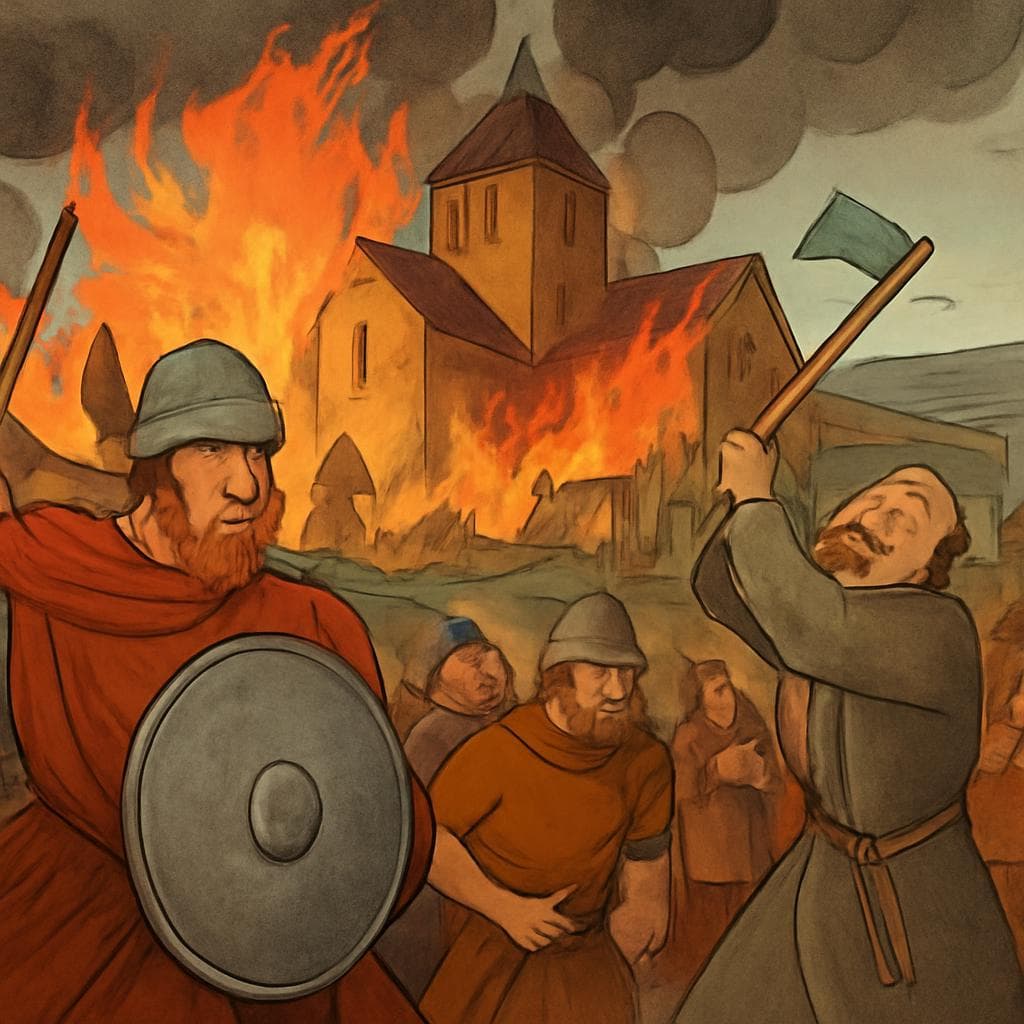
When Viking longships appeared on the horizon, English coastal communities knew terror was coming. By the late tenth century, raids had escalated from opportunistic hit-and-run attacks into full-scale military campaigns led by seasoned warlords. England's King Æthelred II — later nicknamed "the Unready," meaning poorly-counselled — faced a brutal choice: fight or pay.
He paid.
The Silver That Started It All
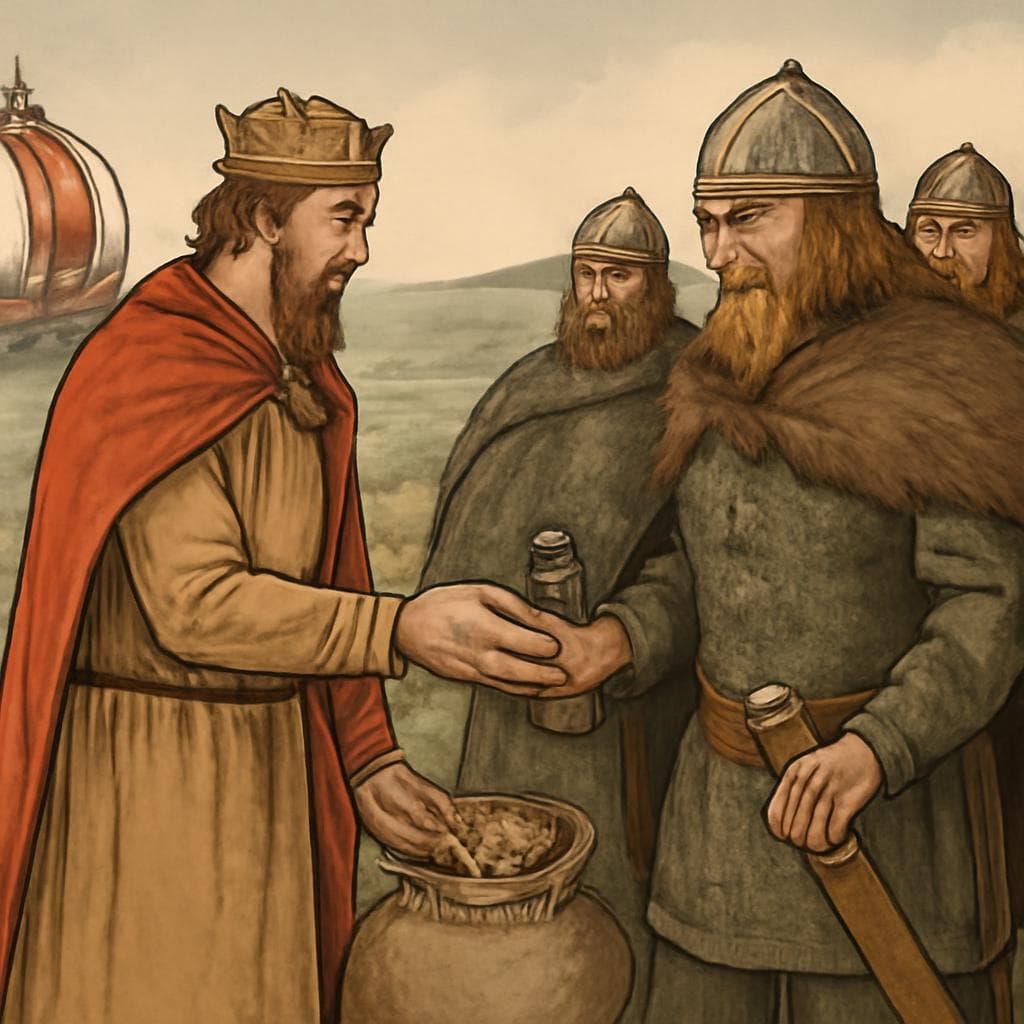
The practice effectively kicked off after the Battle of Maldon in 991, one of the most celebrated military disasters in English history. A Viking force, likely led by Olaf Tryggvason, defeated an Anglo-Saxon army on the Essex coast. The aftermath was staggering: England handed over around 3,300 kilograms of silver — roughly 10,000 pounds — to persuade the raiders to leave. It was a colossal sum, and it set a dangerous precedent.
The word "Danegeld" itself translates loosely as "Danish payment" or "Danish tribute," and it became a formal tax levied on the English population to raise the funds. Ordinary people were essentially being taxed to bribe an enemy army. The money came from land assessments across the kingdom, making it one of the earliest systematic taxes in English history.
A Peace That Never Held
The fundamental problem was obvious even at the time: paying raiders rewarded raiding. Each successful tribute taught the Vikings that England was a profitable target. The payments grew larger with each new demand — 16,000 pounds in 994, 24,000 in 1002, 36,000 in 1007, and a jaw-dropping 48,000 pounds in 1012. That final payment came after the Vikings had captured and murdered the Archbishop of Canterbury, pelting him with ox bones at a drunken feast.
The peace bought by each payment rarely lasted more than a few years. Viking leaders would pocket the silver, return home, and then sail back when funds ran low. Æthelred's reign saw England descend into a cycle of tribute, temporary calm, and renewed assault that ultimately ended with the Danish king Cnut seizing the English throne in 1016.
More Than Just a Bribe
Despite its reputation as an act of weakness, the Danegeld had a lasting administrative legacy. The tax machinery built to collect it was sophisticated and remarkably efficient. When William the Conqueror arrived in 1066, he kept the system running under a new name, and elements of it informed the famous Domesday Book survey of 1086.
So England's desperate attempt to buy off Viking raiders accidentally produced some of the most advanced fiscal infrastructure in medieval Europe. The Vikings got their silver. England got a bureaucracy. History has a funny way of working out.