The Quiz Question
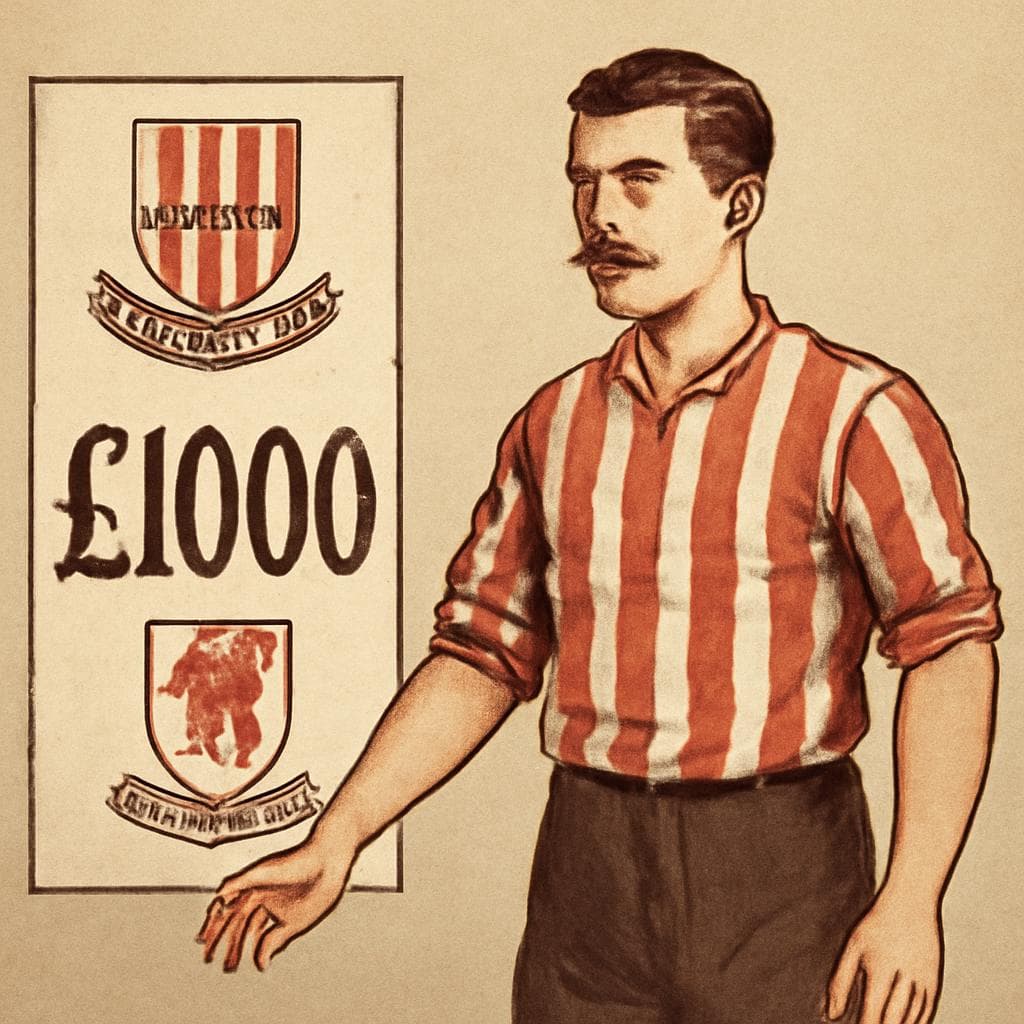
Which player became English football's first ever four-figure transfer when Sunderland sold him to Middlesbrough for 1,000 pounds in February 1905?
- A. Alf Common
- B. Steve Bloomer
- C. Billy Meredith
- D. Vivian Woodward
The answer is A. Alf Common. Here is the full story.
The £1,000 Man Who Changed Football Forever
In February 1905, English football crossed a threshold it could never uncross. Alf Common became the sport's first four-figure transfer when Sunderland sold him to Middlesbrough for the then-staggering sum of £1,000 — a fee that caused genuine public outrage and even drew questions in the corridors of power.
Who Was Alf Common?
Common was a powerfully built centre-forward from Sunderland, born in 1880, who had already made a name for himself as one of the most physical and effective strikers in the Football League. He was stocky, strong, and had a knack for finding the net when it mattered. Before his record-breaking move, he had already played for Sunderland, Sheffield United, and back to Sunderland again — a well-travelled career even by early 20th-century standards.
His reputation was solid enough that clubs were willing to break the financial mould to get him. But nobody expected quite how dramatically that mould would shatter.
Why Middlesbrough Paid So Much
Middlesbrough were in serious trouble. Sitting near the bottom of the First Division and staring relegation in the face, the club's directors took the extraordinary decision to spend a four-figure sum — roughly equivalent to several years' wages for an ordinary working man at the time — to sign a player who they hoped could save their season.
It was a gamble that raised eyebrows across the country. Newspapers ran furious editorials. The Football Association was so alarmed by the fee that it launched an investigation into the deal, fearing that money was beginning to corrupt the spirit of the game. Sound familiar?
Did It Work?
Remarkably, yes. Common delivered almost immediately. He scored on his debut against Sheffield United and went on to help Middlesbrough avoid the drop. Whether the fee was justified depends on how you measure it, but in terms of pure results, Boro got exactly what they paid for.
The Bigger Picture
What makes this moment so historically significant isn't just the number — it's what it represented. Football was already becoming a business, and the £1,000 fee was a clear signal that clubs were willing to treat players as commercial assets with a market value. The outrage at the time mirrors debates that have echoed through every decade since, right up to the nine-figure transfers of the modern game.
Common himself went on to play for Woolwich Arsenal and Middlesbrough again before retiring in 1914. He died in 1946, having lived long enough to see the game he helped commercialise transform beyond recognition.
But every blockbuster transfer you've ever read about — every record fee, every controversial big-money signing — traces its lineage back to one stocky striker from Wearside and a cheque for one thousand pounds.