The Quiz Question
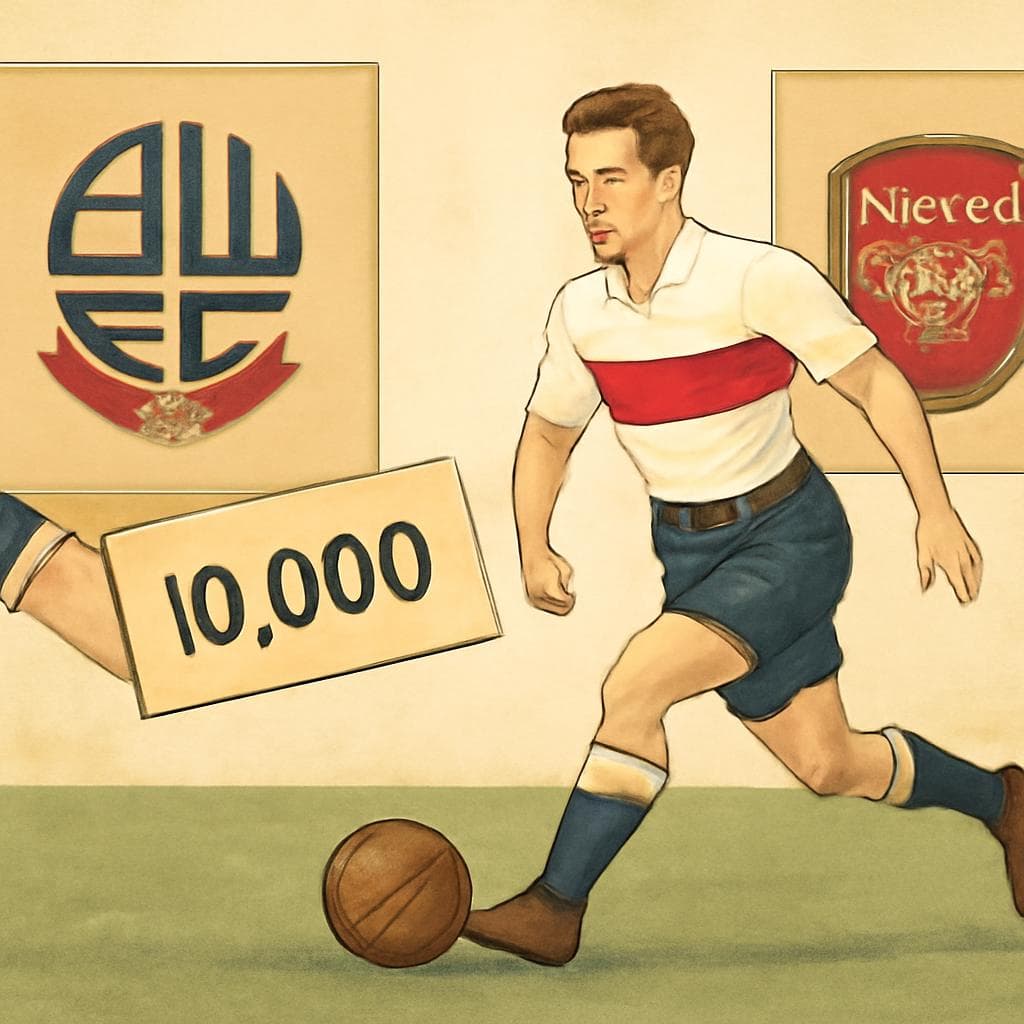
Bolton Wanderers sold which inside-forward to Arsenal in 1928 for a new British record fee of 10,000 pounds?
- A. David Jack
- B. Ted Vizard
- C. Joe Smith
- D. Harry Nuttall
The answer is A. David Jack. Here is the full story.
The Transfer That Changed Football Forever
In the autumn of 1928, English football crossed a threshold it had never reached before. David Jack, one of the most elegant inside-forwards of his generation, made the journey from Bolton Wanderers to Arsenal for a fee of £10,890 — smashing through the £10,000 barrier for the first time in British football history and sending shockwaves through the sport.
Who Was David Jack?
David Jack was no ordinary player. Born in Bolton in 1899, he had already etched his name into football folklore before Arsenal came calling. He scored the very first goal ever at Wembley Stadium — a composed finish in Bolton's 2–0 FA Cup Final victory over West Ham in 1923, the famous "White Horse Final." He added another FA Cup winner's medal in 1926. By the time Herbert Chapman set his sights on him, Jack was a battle-hardened, technically gifted footballer at the peak of his powers.
Herbert Chapman's Cunning Negotiation
The story behind the deal is almost as legendary as the fee itself. Arsenal manager Herbert Chapman and club secretary Bob Wall arrived at the London hotel meeting with Bolton's representatives armed with a clever psychological trick. Before negotiations began, Chapman reportedly sent his colleague ahead to the bar with instructions to buy up as much gin and whisky as possible — and to ensure the Bolton directors' glasses were always full. Chapman himself stuck to soft drinks. By the time the serious talking started, Bolton's men were reportedly in no condition to drive a hard bargain. The fee agreed was still a record-smasher, but some historians suggest Bolton might have pushed for even more under sharper circumstances.
What Jack Brought to Arsenal
Jack didn't just arrive with a big price tag — he delivered. At Highbury, he slotted into Chapman's revolutionary WM formation and became a key creative force. He won the First Division title three times with Arsenal and added another FA Cup to his collection. In total, he scored 124 goals in 208 appearances for the club, a remarkable return for a player in a creative, link-up role rather than a pure striker's position.
Why This Transfer Mattered
The £10,000 barrier had long loomed over English football as an almost mythical ceiling. Breaking it signalled a new era — one where clubs would increasingly treat top players as major financial investments. It also underlined Arsenal's emerging status as the dominant force of the 1930s, bankrolled by the ambitious chairman Sir Henry Norris and masterminded by the visionary Chapman.
David Jack's move wasn't just a transaction. It was a statement — and the ripple effects shaped how football clubs thought about buying and valuing talent for decades to come.