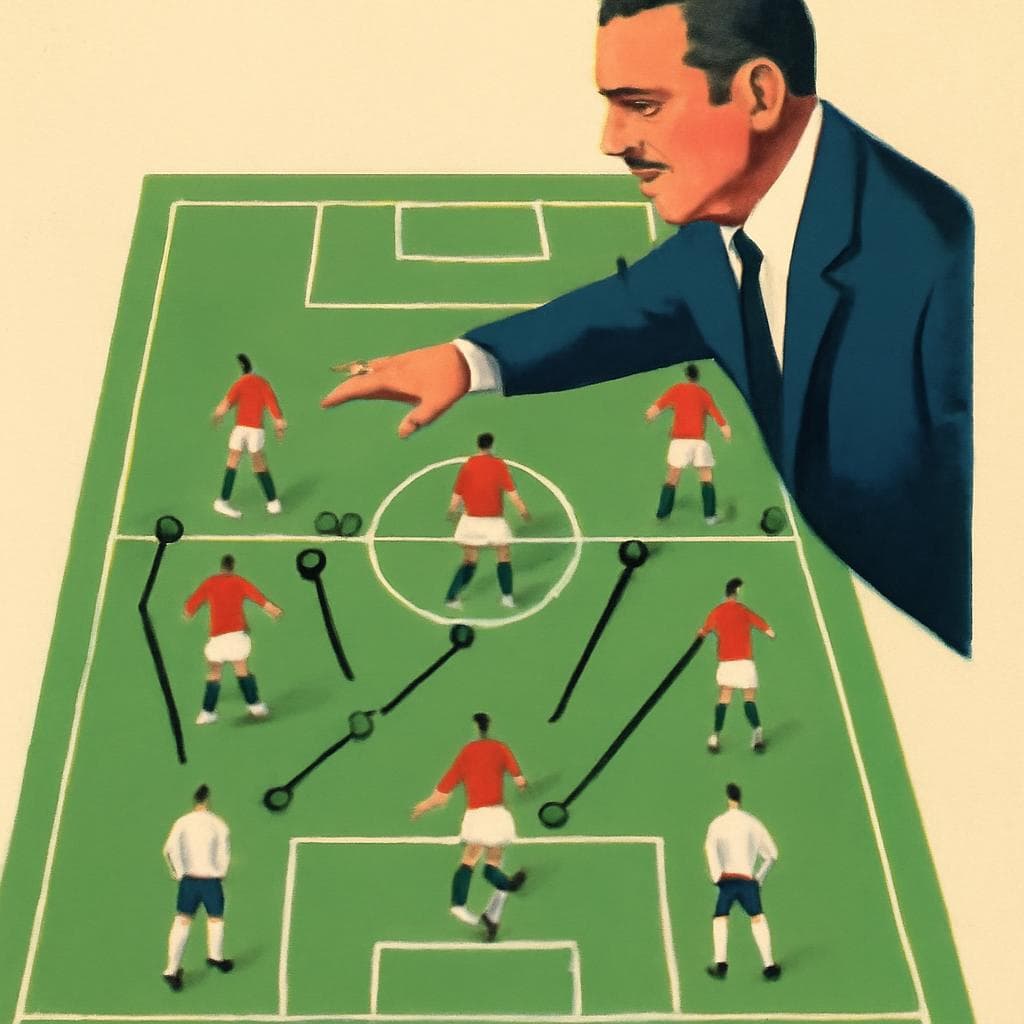
The Quiz Question
Alf Ramsey's tactical system that won England the 1966 World Cup, ditching traditional wingers, became known as what?
- A. Total Football
- B. The wingless wonders
- C. The diamond system
- D. Route one
The answer is B. The wingless wonders. Here is the full story.
England's "Wingless Wonders" and the Tactic That Changed Football
When Alf Ramsey took charge of England in 1963, he made a bold promise: England would win the 1966 World Cup. At the time, plenty of people laughed. By the end of the summer of '66, nobody was laughing — and the tactical system Ramsey used to deliver on that promise had earned one of football's most memorable nicknames.
Throwing Out the Winger Playbook
For decades, English football was built around wide men — fleet-footed wingers who would hug the touchline, beat their full-back, and whip crosses into the box. It was tradition. It was orthodoxy. Ramsey didn't care. He looked at the personnel available to him and decided that rigid, traditional wingers were a luxury England simply didn't need.
Instead, he deployed a fluid 4-4-2 shape, sometimes described as a 4-3-3 hybrid, where the wide midfielders worked tirelessly up and down the flank rather than simply standing out wide waiting for the ball. The system demanded huge physical effort and collective discipline — and it worked because the players Ramsey had were exactly the right fit for it.
The Players Who Made It Click
The spine of the team tells the story. Bobby Moore anchored the defence with composure that bordered on arrogance. Alan Ball, only 21 years old during the tournament, was a relentless engine in midfield — he ran West Germany into the ground in the final. Geoff Hurst, famously the only man to score a hat-trick in a World Cup final, led the line. Martin Peters drifted brilliantly from deep positions to arrive late and score crucial goals.
Notably, Ramsey dropped established wide players like Terry Paine and Ian Callaghan after the group stage, committing fully to his wingless setup for the knockout rounds. It was a gutsy call that defined the tournament.
The Name That Stuck
The press dubbed the side the "Wingless Wonders" — a phrase that captured both the novelty of the approach and the admiration it earned. It wasn't meant entirely as a compliment at first; some traditionalists were horrified by the abandonment of the winger. But after a 4-2 victory over West Germany at Wembley on 30 July 1966, the nickname became a badge of honour.
A Legacy That Outlasted the Trophy
Ramsey's system influenced how coaches around the world thought about width, pressing, and positional flexibility. It pre-dated the pressing philosophies that would sweep through European football decades later. The idea that a team didn't need a conventional winger to dominate and create space was genuinely radical in 1966.
England have never won the World Cup since, which makes that summer feel even more remarkable. And at the heart of it was one man's willingness to rip up convention — and a nickname that football has never forgotten.