The Quiz Question
Which planet has the most confirmed moons?
The answer is Saturn, with 146 confirmed moons (surpassing Jupiter's 95). Here is the full story.
Saturn's Moon Collection Is Truly Out of This World
For a long time, Jupiter wore the crown as the planet with the most moons in our solar system. Then, in 2023, astronomers confirmed a fresh batch of newly discovered moons orbiting Saturn — pushing its total to a staggering 146. Jupiter, sitting at 95 confirmed moons, suddenly found itself in second place. It was a genuine cosmic upset.
How Do You Even Find 146 Moons?
Most of Saturn's moons aren't the grand, dramatic worlds you might picture. The majority are small, irregularly shaped chunks of rock and ice — some no wider than a few kilometres across. Spotting them requires powerful telescopes, careful observation over time, and a lot of computational legwork to confirm that an object is genuinely orbiting Saturn rather than just drifting nearby.
The big 2023 discovery came largely from a team led by astronomer Edward Ashton, who used a technique called "shift and stack." Rather than taking single long-exposure images, they took multiple shorter ones and digitally shifted them to track where a potential moon would be moving — effectively making faint objects brighter and easier to detect. It's painstaking work, but clearly effective.
Saturn's Moons Range From Iconic to Obscure
Not all 146 are created equal. Titan is the rock star of the group — a moon larger than the planet Mercury, with a thick nitrogen atmosphere and lakes of liquid methane on its surface. Scientists consider it one of the most compelling places in the solar system to search for signs of life, or at least the chemistry that precedes it.
Then there's Enceladus, which shoots enormous geysers of water vapour into space from a subsurface ocean hidden beneath its icy crust. NASA's Cassini spacecraft flew directly through those plumes and detected organic molecules — the building blocks of life.
The rest of Saturn's moon family? Mostly nameless, irregularly shaped, and grouped into clusters based on their orbital characteristics. Many are thought to be fragments from larger moons that broke apart in ancient collisions.
Why Does Saturn Have So Many?
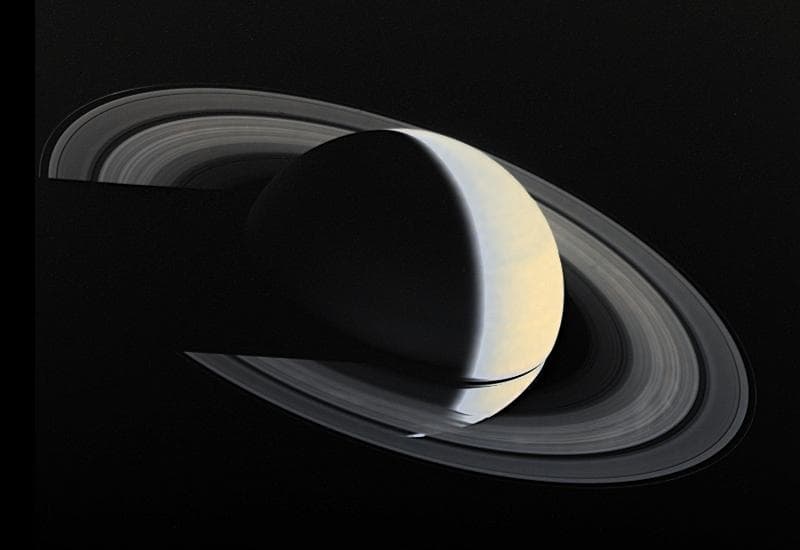
Saturn's enormous mass gives it powerful gravitational influence, making it excellent at capturing passing objects. Its famous ring system is also deeply connected to its moons — some moons actively shepherd the rings, while others may have formed from the same original material. The whole system is interlinked in a way that makes Saturn a fascinating laboratory for understanding how planets and their satellites evolve.
The Count Isn't Finished Yet
Here's the thing — 146 is likely not the final number. As telescope technology improves and detection methods get sharper, more small moons will almost certainly be confirmed. Saturn may well extend its lead. Jupiter is putting up a fight too, with its own candidate moons being studied. The moon-counting race between these two giants is far from over.