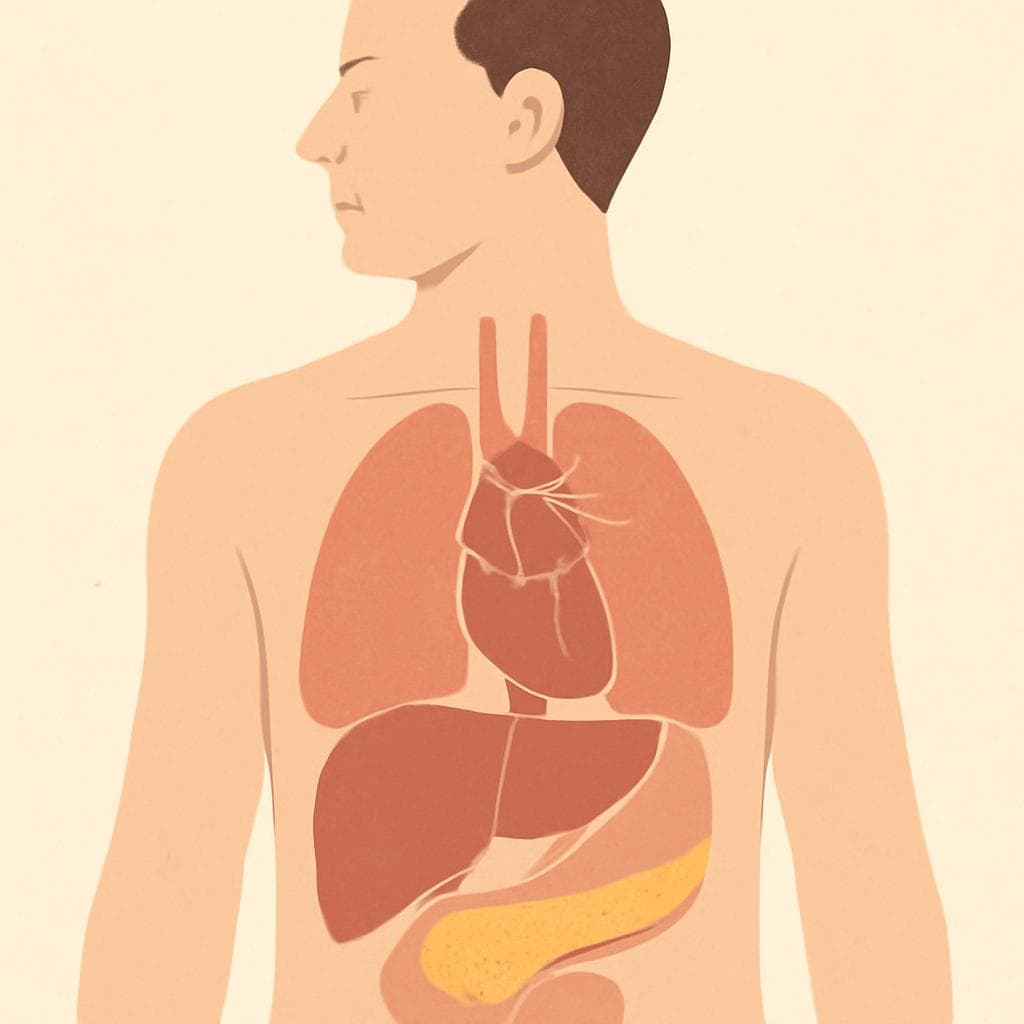
The Quiz Question
Which organ produces insulin in the human body?
- A. Liver
- B. Kidney
- C. Pancreas
- D. Spleen
The answer is C. Pancreas. Here is the full story.
The Pancreas: Your Body's Blood Sugar Boss
Tucked behind your stomach, roughly the size of your hand, sits one of the most quietly essential organs in your entire body. The pancreas doesn't get nearly as much attention as the heart or brain, but without it doing its job properly, your body's ability to manage energy would fall apart fast.
What Insulin Actually Does
Every time you eat — especially carbohydrates — your blood glucose levels rise. Insulin is the hormone that tells your body's cells to open up and absorb that glucose, pulling it out of the bloodstream and either using it for immediate energy or storing it for later. Think of insulin as a key, and your cells as locked doors. Without the key, glucose just builds up in the blood with nowhere to go.
Without insulin doing that job, blood sugar climbs to dangerous levels — a condition known as hyperglycemia. Left unchecked, it can damage blood vessels, nerves, kidneys, and the eyes. That's exactly what happens in unmanaged diabetes.
The Islets of Langerhans
Here's where it gets genuinely fascinating. Insulin isn't produced by the pancreas as a whole — it comes from tiny, specialized clusters of cells scattered throughout the organ called the Islets of Langerhans, named after German pathologist Paul Langerhans, who first described them in 1869. These islets make up only about 1–2% of the pancreas's total mass, yet they carry enormous responsibility.
Within those islets, it's specifically the beta cells that manufacture and secrete insulin. The pancreas contains roughly one million of these islets, each one acting like a miniature hormone factory constantly monitoring blood sugar and responding in real time.
A Double-Duty Organ
One thing that surprises many people is that the pancreas actually has two completely separate jobs. Its exocrine function involves producing digestive enzymes — like lipase, amylase, and protease — that flow into the small intestine to break down fats, carbohydrates, and proteins from food. Its endocrine function is the hormone-releasing side, which includes insulin but also glucagon (which does the opposite of insulin, raising blood sugar when levels drop too low).
These two systems run in parallel inside the same organ, which is a remarkable piece of biological engineering.
When Things Go Wrong
In Type 1 diabetes, the immune system mistakenly destroys the beta cells, meaning the pancreas can no longer produce insulin at all. In Type 2 diabetes, the pancreas often still produces insulin, but the body's cells stop responding to it effectively. Both conditions require careful management — and both trace directly back to what the pancreas is or isn't doing.
It's a small organ with an outsized role, quietly keeping your blood chemistry balanced every single minute of every day.