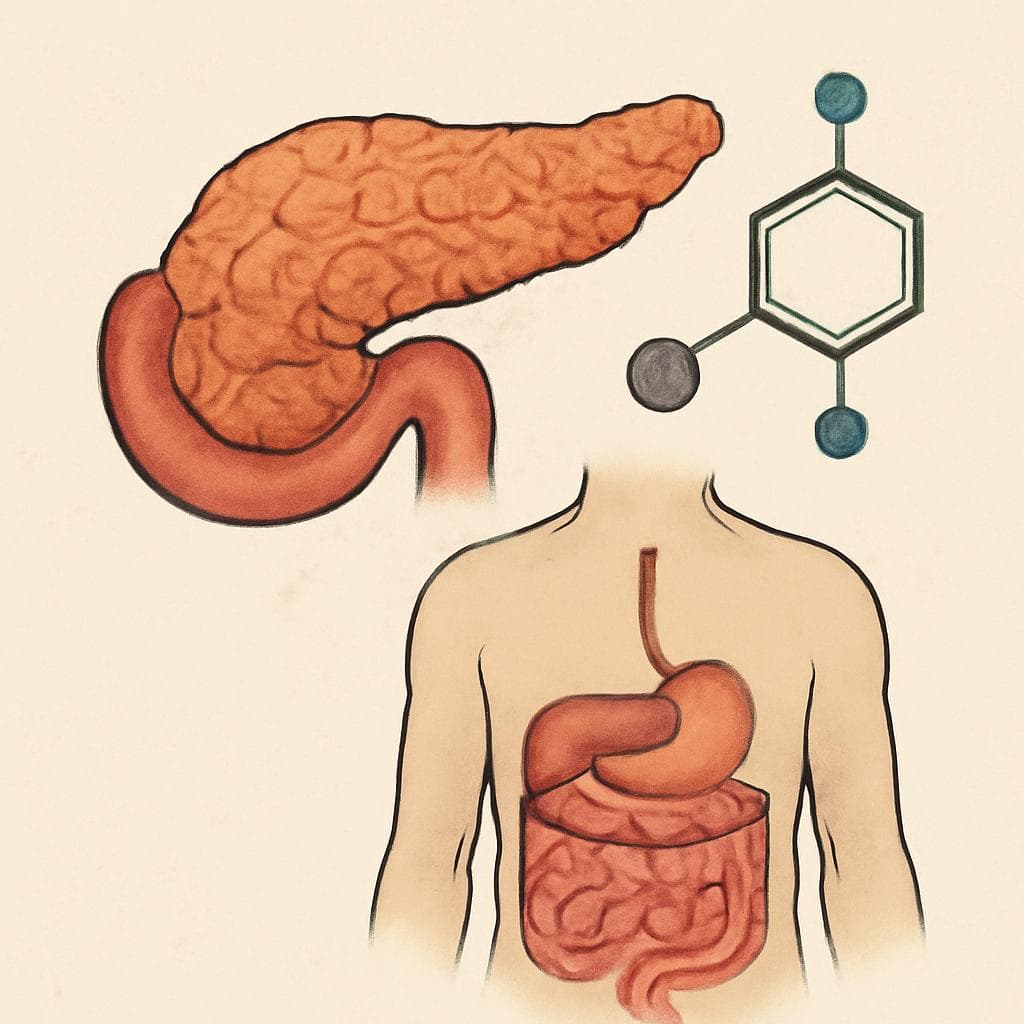
The Quiz Question
Which organ in the human body produces insulin?
- A. Liver
- B. Kidney
- C. Pancreas
- D. Spleen
The answer is C. Pancreas. Here is the full story.
The Pancreas: Your Body's Hidden Blood Sugar Boss
Tucked behind your stomach, roughly the size of your hand, sits one of the most underappreciated organs in the human body — the pancreas. While it rarely gets the fame of the heart or brain, this spongy, yellowish gland quietly runs one of the most critical operations in your body: keeping your blood sugar under control.
Where Insulin Actually Comes From
Insulin isn't produced by the pancreas as a whole. The job falls to specialised clusters of cells scattered throughout the organ called the islets of Langerhans — named after the German medical student Paul Langerhans, who first described them in 1869. These tiny islands of tissue make up only about 1–2% of the pancreas's total mass, yet they carry enormous responsibility.
Within those islets, it's a specific cell type — the beta cell — that manufactures and releases insulin. Beta cells act like glucose sensors. When blood sugar rises after a meal, they detect the spike and pump insulin into the bloodstream as a direct response.
What Insulin Actually Does
Think of insulin as a key. Glucose — your body's primary fuel — floats in the bloodstream after you eat, but it can't get inside most cells without help. Insulin unlocks the door, allowing glucose to enter muscle, fat, and liver cells where it can be used for energy or stored for later.
Without insulin, glucose piles up in the blood while cells starve. That's exactly what happens in Type 1 diabetes, where the immune system destroys beta cells entirely, leaving the body unable to produce insulin at all. People with Type 1 diabetes need to inject synthetic insulin every day to survive.
A Dual-Purpose Organ
Here's a fact that surprises many people: the pancreas actually has two completely separate jobs. Its endocrine function — releasing hormones like insulin and glucagon directly into the blood — is what most quiz questions focus on. But its exocrine function is equally vital: producing digestive enzymes that flow into the small intestine to break down fats, proteins, and carbohydrates from food.
Same organ, two totally different systems working in parallel.
A Brief History of a Life-Saving Discovery
Before 1921, a Type 1 diabetes diagnosis was essentially a death sentence. That year, Canadian researchers Frederick Banting and Charles Best isolated insulin from dog pancreases and used it to treat a dying 14-year-old boy named Leonard Thompson. It worked. Banting won the Nobel Prize in 1923, and insulin remains one of the most important medical discoveries in history.
Today, most insulin used by diabetic patients is produced synthetically using genetically engineered bacteria — but it's still designed to mimic exactly what those tiny beta cells in the islets of Langerhans do naturally, every single day.