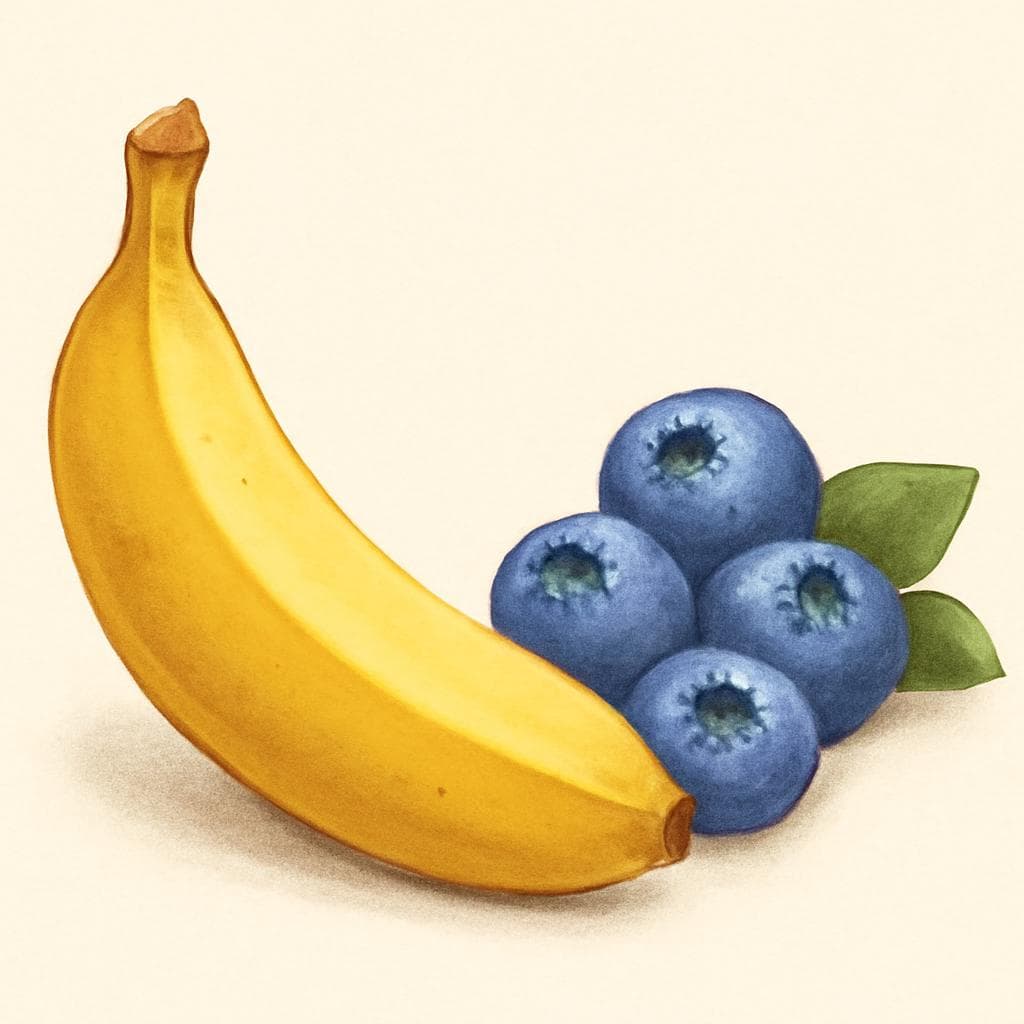
The Quiz Question
Which everyday fruit is technically classified as a berry, unlike strawberries?
- A. Banana
- B. Raspberry
- C. Blackberry
- D. Apple
The answer is A. Banana. Here is the full story.
Why Bananas Are Berries (And Strawberries Aren't)
It sounds like the setup to a bad joke, but it's completely true: under the strict rules of botanical science, the banana you peel with your morning cereal is a genuine berry. The strawberry you dip in chocolate? Not even close.
What Actually Makes a Berry a Berry
In everyday language, we call almost any small, juicy fruit a "berry." But botanists don't care about size or common names — they care about structure. A true botanical berry must develop from a single flower with one ovary, and it must have three distinct layers: the outer skin (exocarp), the fleshy middle (mesocarp), and an inner layer that surrounds the seeds (endocarp). The seeds must also be embedded within that flesh.
Bananas tick every box. They develop from a single flower, their soft flesh wraps entirely around the seeds (those tiny dark specks you barely notice in a commercial banana), and they have all three required layers. Botanically speaking, a banana is a berry in exactly the same way a grape is — and yes, grapes are proper berries too.
So What's Wrong With a Strawberry?
Strawberries fail on a technicality that's genuinely surprising. The red, fleshy part you eat doesn't actually develop from the flower's ovary — it develops from the receptacle, the base that holds the flower together. The true fruits of a strawberry are those tiny yellow-green dots on the outside, called achenes. Each one is a separate little fruit containing a single seed. That makes a strawberry what botanists call an "accessory fruit" or "false fruit." Delicious, but botanically fraudulent.
Raspberries and blackberries face a similar problem. They're made up of clusters of small individual drupelets, each with its own pit — making them "aggregate fruits," not berries.
The Berry Club Is Stranger Than You Think
Once you understand the botanical definition, the list of true berries starts to look very weird. Tomatoes are berries. Avocados are berries. Kiwi fruits, eggplants, and chili peppers all qualify. Watermelons are a type of berry called a "pepo." Meanwhile, cherries, peaches, and plums — which feel far more "berry-like" in the popular sense — are actually drupes, fruits with a hard stone pit at the centre.
Why the Confusion Exists
The gap between botanical language and everyday language developed over centuries. People named fruits based on how they looked, tasted, and were used — long before anyone was dissecting flower ovaries under a microscope. Scientific classification came later and never bothered to align itself with kitchen vocabulary. The result is a gloriously confusing overlap that's been tripping up pub quiz teams ever since.
So next time someone dismisses a banana as boring, remind them: it's a scientifically certified berry with more botanical credibility than any strawberry on the planet.