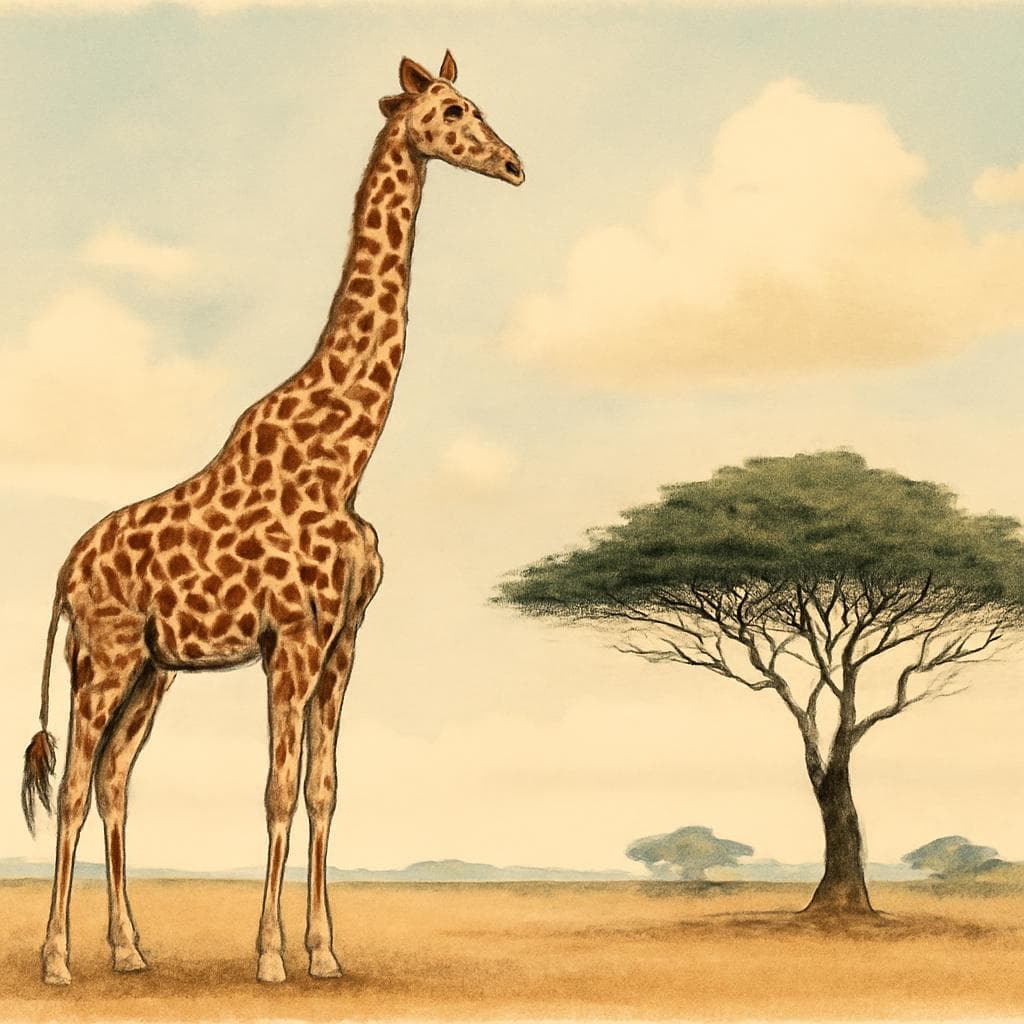
The Quiz Question
What is the tallest animal in the world?
- A. Elephant
- B. Giraffe
- C. Ostrich
- D. Polar bear
The answer is B. Giraffe. Here is the full story.
The Giraffe: Nature's Ultimate High-Rise
Standing up to 5.8 metres (19 feet) tall, the giraffe holds an uncontested title as the tallest living animal on Earth. To put that in perspective, a full-grown giraffe could comfortably peer into the second-floor window of most buildings — without even stretching.
Just How Tall Are We Talking?
Male giraffes, called bulls, typically reach between 5.2 and 5.8 metres in height. Females are a bit shorter, usually topping out around 4.3 metres. Even newborn calves enter the world at roughly 1.8 metres tall — about the height of an average adult human — and can stand and walk within hours of birth. That head start matters, because predators aren't known for patience.
The Neck Alone Is an Engineering Marvel
That famous neck can measure up to 1.8 metres all by itself. Yet despite its extraordinary length, a giraffe's neck contains just seven vertebrae — the same number as a human's. Each individual vertebra is simply much, much longer, measuring up to 25 centimetres each. Evolution didn't reinvent the blueprint; it just scaled it up dramatically.
Why So Tall?
The most obvious explanation is food. Giraffes browse the high canopy of acacia trees in sub-Saharan Africa, reaching leaves that shorter animals simply can't access. This gives them a near-exclusive food source during dry seasons when lower vegetation gets stripped bare by competing herbivores.
But height isn't just about lunch. Research published in the journal Nature Communications has suggested that a taller neck also helps with thermoregulation, keeping the body higher above the sun-baked ground where temperatures are hottest. There's also a strong case for sexual selection — taller males tend to win "necking" battles, where males swing their necks like pendulums to headbutt rivals, and victorious males get preferred access to mates.
The Heart That Has to Work Overtime
Being tall comes with serious plumbing challenges. A giraffe's heart weighs around 11 kilograms and generates roughly twice the blood pressure of other large mammals, just to push blood all the way up that long neck to the brain. When a giraffe lowers its head to drink — a genuinely awkward and vulnerable manoeuvre requiring legs to splay wide apart — a complex network of valves and pressure-regulating vessels prevents that rush of blood from causing a stroke.
A Species Under Pressure
There are four recognised giraffe species, all native to Africa, and all facing population pressures from habitat loss and poaching. The IUCN lists several subspecies as endangered. Often called a "silent extinction," the giraffe's decline has received far less public attention than other iconic animals, despite populations dropping significantly over recent decades.
Towering above every other creature on the planet, the giraffe is one of nature's most spectacular experiments in extreme anatomy — and a reminder of just how inventive evolution can be.