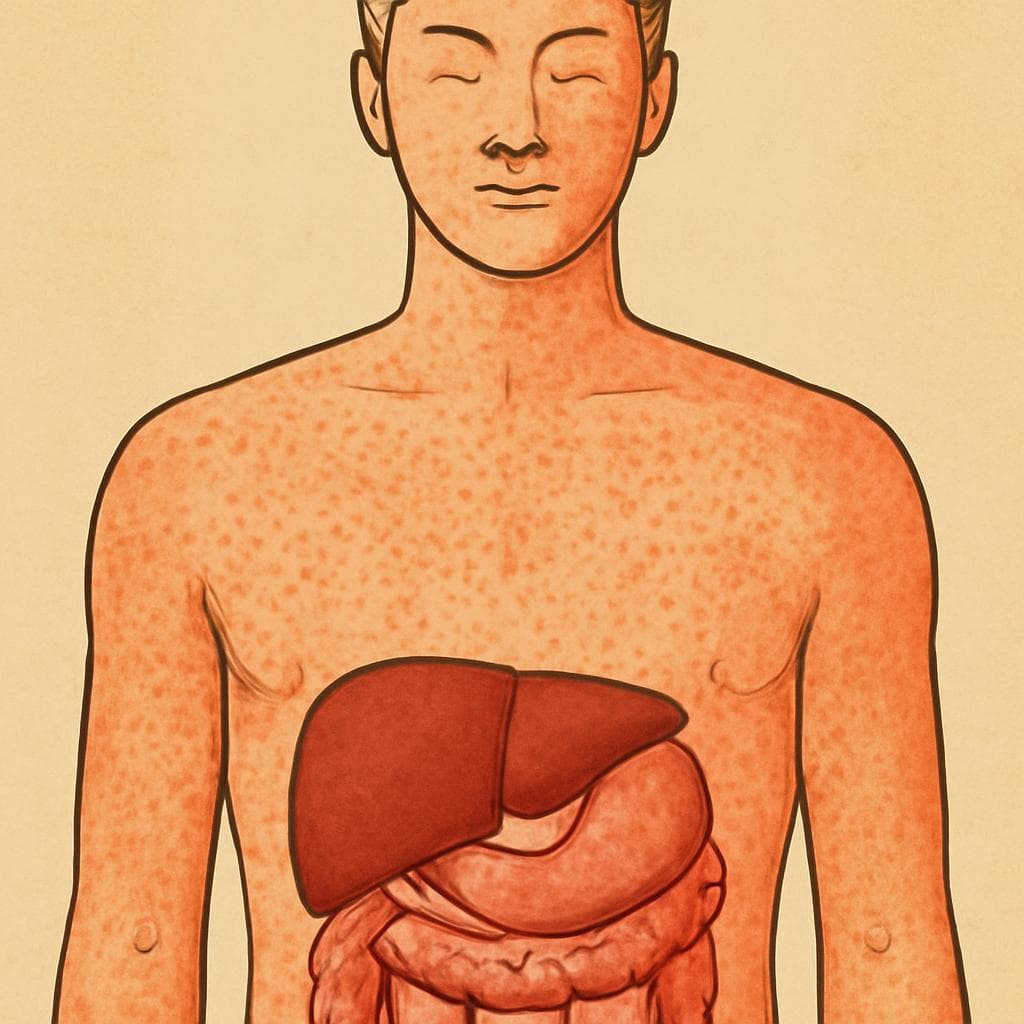
The Quiz Question
What is the largest organ in the human body?
- A. Liver
- B. Lung
- C. Skin
- D. Brain
The answer is C. Skin. Here is the full story.
Your Skin Is Doing More Than You Think
Most people guess the liver, or maybe the brain, when asked about the body's largest organ. Both are impressive contenders — but they're not even close when you factor in surface area and weight. The skin wins, and it isn't a tight race.
In the average adult, skin covers roughly 1.7 to 2 square metres of surface area and accounts for about 15% of total body weight — somewhere between 3.5 and 10 kilograms depending on the person. That makes it heavier than your brain, your liver, and your heart combined.
Three Layers, One Remarkable System
Skin isn't just a wrapper. It's a complex, living organ made up of three distinct layers, each with a specific job.
The epidermis is the outermost layer — the part you can see and touch. It's constantly renewing itself, shedding around 30,000 to 40,000 dead skin cells every hour. You essentially get a brand-new outer skin surface roughly every two to four weeks.
Beneath that sits the dermis, which contains collagen fibres, blood vessels, hair follicles, sweat glands, and nerve endings. This is where sensation happens — where you feel heat, pressure, pain, and texture.
The deepest layer, the hypodermis (sometimes called the subcutaneous layer), is made mostly of fat and connective tissue. It insulates your body, cushions your organs, and anchors your skin to the muscles and bones underneath.
What Skin Actually Does
Skin pulls off an extraordinary number of tasks simultaneously. It acts as a physical barrier against bacteria, viruses, UV radiation, and environmental toxins. It regulates your body temperature through sweating and by controlling blood flow near the surface. It synthesises vitamin D when exposed to sunlight — a process no other organ can replicate.
Skin also plays a major role in your immune system. Specialised cells in the epidermis called Langerhans cells detect foreign invaders and trigger immune responses before an infection can take hold.
The Numbers Are Staggering
There are roughly 300 million skin cells in the human body at any given moment. Each square centimetre of skin contains about 3 metres of blood vessels, 4 metres of nerves, and hundreds of sweat glands. You lose and replace the entire outer layer of your epidermis so frequently that the dust in your home is, in part, made up of your own shed skin cells — a slightly unsettling but entirely true fact.
Skin Deserves More Credit
We tend to think of skin as passive — just something that holds everything else in. But it's a dynamic, constantly renewing, multitasking organ that works around the clock to keep you alive, regulated, and protected. The next time someone asks which organ is the largest, you'll know exactly why the answer isn't the one most people expect.