The Quiz Question
What is the largest mammal on Earth?
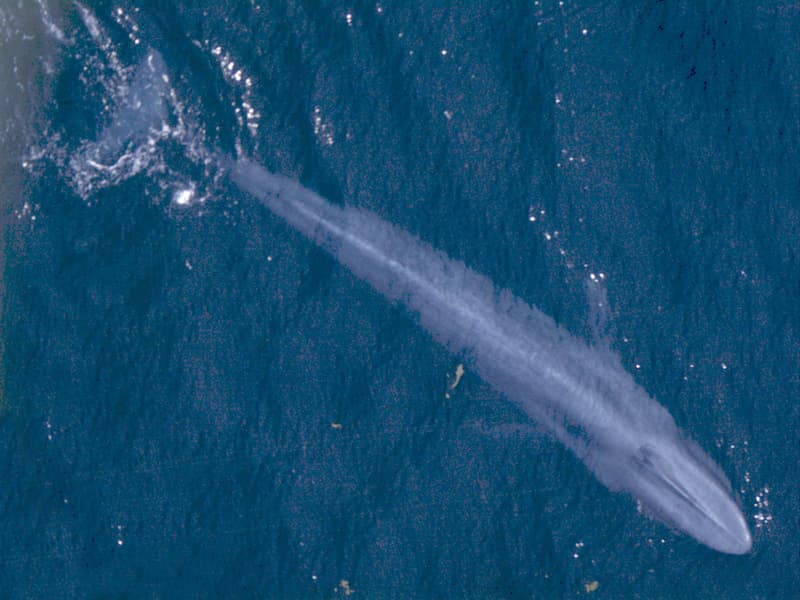
The answer is The blue whale (Balaenoptera musculus). Here is the full story.
The Biggest Animal to Ever Exist on Earth
Not just the largest mammal alive today — the blue whale holds the title of the largest animal ever known to have existed on our planet. That includes every dinosaur that ever walked the Earth. When you wrap your head around that, the blue whale stops being just a cool ocean fact and becomes something genuinely mind-bending.
Just How Big Are We Talking?
A fully grown blue whale can reach lengths of up to 30 metres (around 100 feet) — roughly the length of three double-decker buses parked end to end. They can weigh as much as 200 tonnes, though a typical adult clocks in somewhere between 100 and 150 tonnes. Their heart alone is about the size of a small car, and their arteries are wide enough for a human to crawl through. A newborn blue whale calf enters the world at around 7 metres long and gains roughly 90 kilograms per day during its first year of life.
A Giant Built on Tiny Food
Here's the brilliant contradiction at the heart of the blue whale's existence: the largest animal on Earth survives almost entirely on some of the smallest. Blue whales are filter feeders, and their primary diet is krill — tiny shrimp-like crustaceans that are typically just a few centimetres long. During feeding season, a single blue whale can consume up to 4 tonnes of krill in a single day. They lunge through dense krill swarms, taking in massive gulps of water, then push it back out through their baleen plates, trapping the krill inside.
Found in Every Ocean
Blue whales are found in all of the world's major oceans, from the frigid waters near the poles to warmer tropical seas. They tend to spend summer months feeding in cold, nutrient-rich polar waters before migrating toward the equator in winter to breed. Despite their size, they're not easy to spot — they spend most of their time deep below the surface and are spread across enormous stretches of open ocean.
Brought Back from the Brink
For much of the 20th century, blue whales were hunted to near extinction. An estimated 360,000 were killed between 1900 and the 1960s before international protections were put in place. Today, the global population is thought to be somewhere between 10,000 and 25,000 individuals — a fraction of historical numbers, but a slow recovery is underway. They remain classified as endangered by the IUCN.
Why Oceans Allow Such Size
The ocean makes this level of gigantism possible. Water buoyancy supports a body mass that would be structurally impossible on land. The largest land mammals — like elephants — max out around 6 to 7 tonnes before their own skeleton becomes the limiting factor. In the sea, those constraints largely disappear, giving evolution the room to build something truly extraordinary.