The Quiz Question
Roughly what percentage of Earth's surface is covered by water?
- A. 50%
- B. 61%
- C. 71%
- D. 81%
The answer is C. 71%. Here is the full story.
Our Planet Is Really an Ocean World
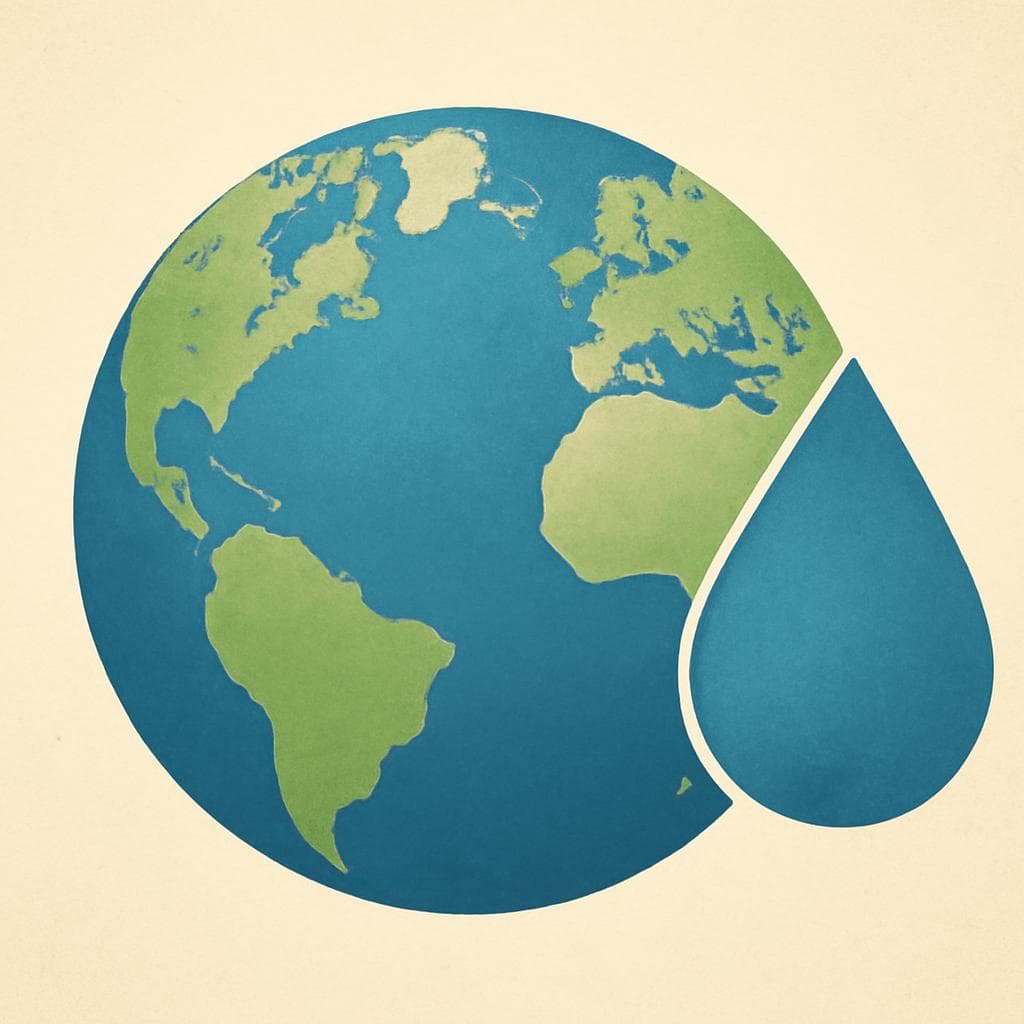
Take a step back and look at Earth from space, and one thing becomes immediately obvious: this place should probably be called "Ocean" rather than "Earth." Just under three-quarters of our planet's entire surface — around 71% — lies beneath water, making it the defining feature of the world we live on.
Where All That Water Actually Lives
The vast majority of Earth's surface water sits in the five interconnected ocean basins. The Pacific alone covers more area than all of Earth's landmasses combined — roughly 165 million square kilometres. The Atlantic, Indian, Southern, and Arctic Oceans make up the rest of that 71%, with smaller contributions from seas, bays, and gulfs stitched along the edges of continents.
Fresh water — the kind in rivers, lakes, and glaciers — accounts for only a tiny sliver of that total surface coverage. Lake Superior, the largest freshwater lake by surface area on Earth, covers about 82,000 square kilometres. Impressive on its own, but a rounding error against the scale of the oceans.
How We Know the Number So Precisely
The 71% figure comes from decades of satellite imaging and careful geographic measurement. NASA and other space agencies have used instruments like radar altimeters and multispectral sensors to map every coastline, ice shelf, and inland sea with remarkable accuracy. Earlier estimates from the 19th and early 20th centuries, calculated by painstakingly dividing globe surface areas mathematically, were already surprisingly close — a testament to the work of early cartographers.
The Remaining 29% — and Why It Matters
Land makes up that remaining 29%, but it isn't evenly spread. The Northern Hemisphere is far more land-heavy, containing about 39% land versus 61% ocean. Flip to the Southern Hemisphere and it's nearly all water — roughly 81% ocean surface. This imbalance has enormous consequences for climate, weather patterns, and even the pace of the seasons between hemispheres.
Water's Role in Making Earth Liveable
That 71% isn't just a fun statistic — it's the engine of life on Earth. The oceans absorb around 90% of the excess heat generated by climate change and produce roughly half of the oxygen we breathe, thanks to microscopic phytoplankton near the surface. They drive the water cycle, regulate global temperatures, and have shaped every civilisation that has ever existed by dictating where food, trade, and survival were possible.
In short, water doesn't just cover most of the planet — it runs it. The next time you see a globe, notice how much blue there is. That's not background detail. That's the main character.