The Quiz Question
How many hearts does an octopus have?
- A. 1
- B. 2
- C. 3
- D. 5
The answer is C. 3. Here is the full story.
Three Hearts and a Very Strange Circulatory System
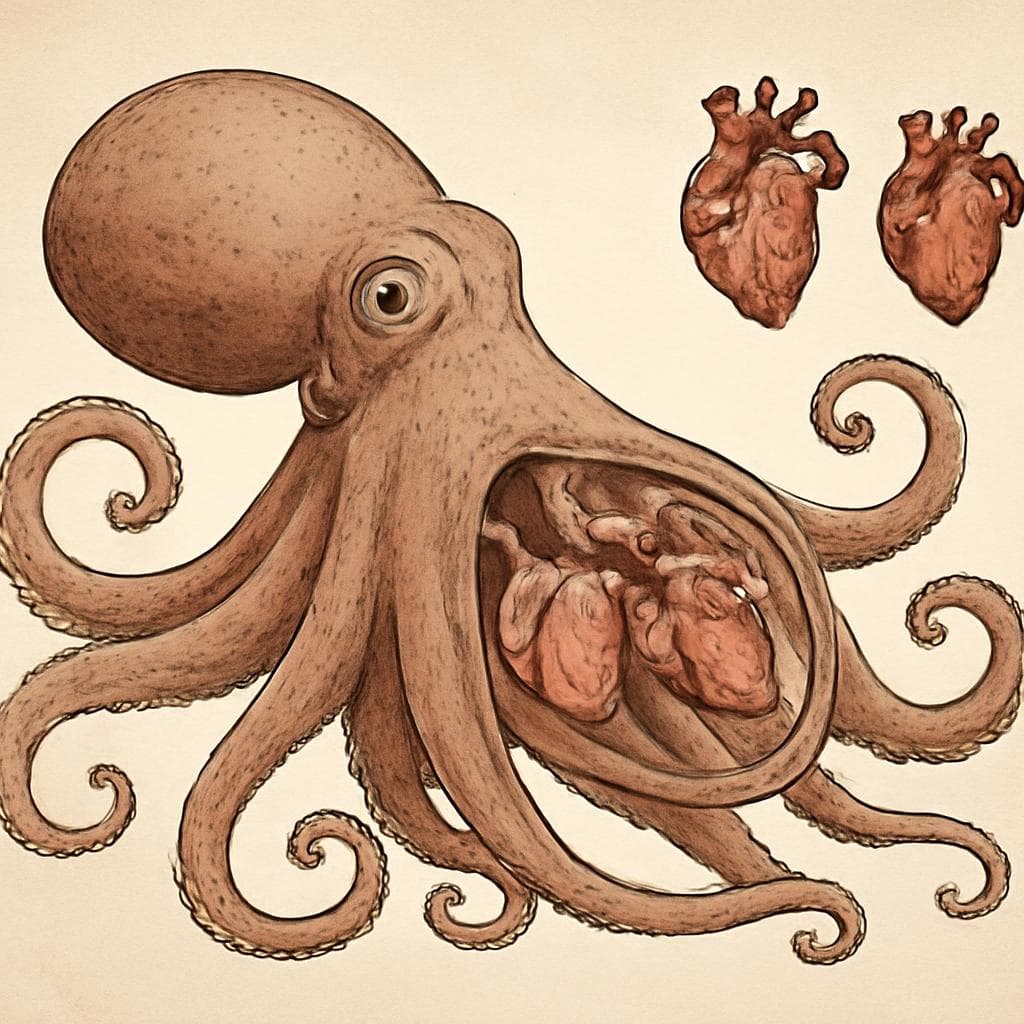
Octopuses are already pretty alien compared to most animals we're familiar with, but their cardiovascular setup takes that strangeness to a whole new level. These remarkable creatures pump blood using not one, not two, but three hearts — and each one has a specific job to do.
What Each Heart Actually Does
The three hearts aren't just backup copies of each other. They divide labor in a clever way. Two of them are called branchial hearts, and they sit right next to the gills. Their sole purpose is to push blood through the gill tissue so it can pick up oxygen. Think of them as dedicated gill pumps.
Once the blood is oxygenated, it moves on to the third heart — the systemic heart. This is the main pump. It takes that freshly oxygenated blood and circulates it out to the rest of the body: the muscles, organs, brain, and all eight arms.
Why Blue Blood Makes It More Complicated
Here's another twist: octopus blood is blue. It contains a copper-based protein called hemocyanin instead of the iron-based hemoglobin found in human blood. Hemocyanin is actually less efficient at carrying oxygen than hemoglobin, which is part of why octopuses need that extra pumping power in the first place. The three-heart system compensates for what hemocyanin lacks in efficiency.
There's a trade-off, though. Hemocyanin works better in cold, low-oxygen environments — which suits the deep-sea and cool coastal waters where many octopus species live. It's an evolutionary solution perfectly matched to their habitat.
A Major Weak Spot
The systemic heart stops beating when an octopus swims. That's not a typo. Locomotion through jet propulsion — where the octopus forcefully expels water from its mantle — temporarily shuts down the main heart. This is why octopuses prefer crawling along the seafloor over sustained open-water swimming. It's literally exhausting at a cardiovascular level. Long-distance swimming would essentially starve their tissues of oxygen.
They Share This Trait with Some Surprising Relatives
Octopuses aren't the only mollusks packing multiple hearts. Squid and cuttlefish — their closest cephalopod relatives — also have three hearts using the same branchial-plus-systemic arrangement. It's a design that evolved hundreds of millions of years ago and has clearly proven its worth, since cephalopods have thrived in oceans across the globe ever since.
Why This Matters Beyond Trivia
Understanding octopus physiology isn't just fascinating cocktail-party material. Researchers studying hemocyanin and cephalopod circulatory systems have gained insights into how life adapts to extreme environments. Some scientists are even exploring hemocyanin's potential in medical applications, including as an immune stimulant in cancer treatments.
Three hearts, blue blood, and a body plan unlike almost anything else on Earth — the octopus is genuinely one of nature's most inventive experiments.