The Quiz Question
Compound interest grows faster than simple interest over time.
- A. True
- B. False
- C. It depends
- D. Not sure
The answer is A. True. Here is the full story.
Why Your Money Grows Faster With Compound Interest
There's a reason Albert Einstein allegedly called compound interest the "eighth wonder of the world." Whether he actually said it or not, the sentiment is spot on — compounding is one of the most powerful forces in personal finance, and understanding it can genuinely change how you think about saving and investing.
The Core Difference
Simple interest is straightforward. You deposit $1,000 at 10% annual interest, and every year you earn exactly $100. After 10 years, you've earned $1,000 in interest. Clean, predictable, and honestly a little boring.
Compound interest works differently. Instead of only earning interest on your original deposit, you also earn interest on the interest you've already collected. That same $1,000 at 10% compounded annually gives you $110 after year one. In year two, you earn 10% on $1,110 — not just the original $1,000. By year 10, your balance sits at roughly $2,594. That's nearly $600 more than simple interest would have given you, from the exact same starting amount and rate.
The Snowball Effect
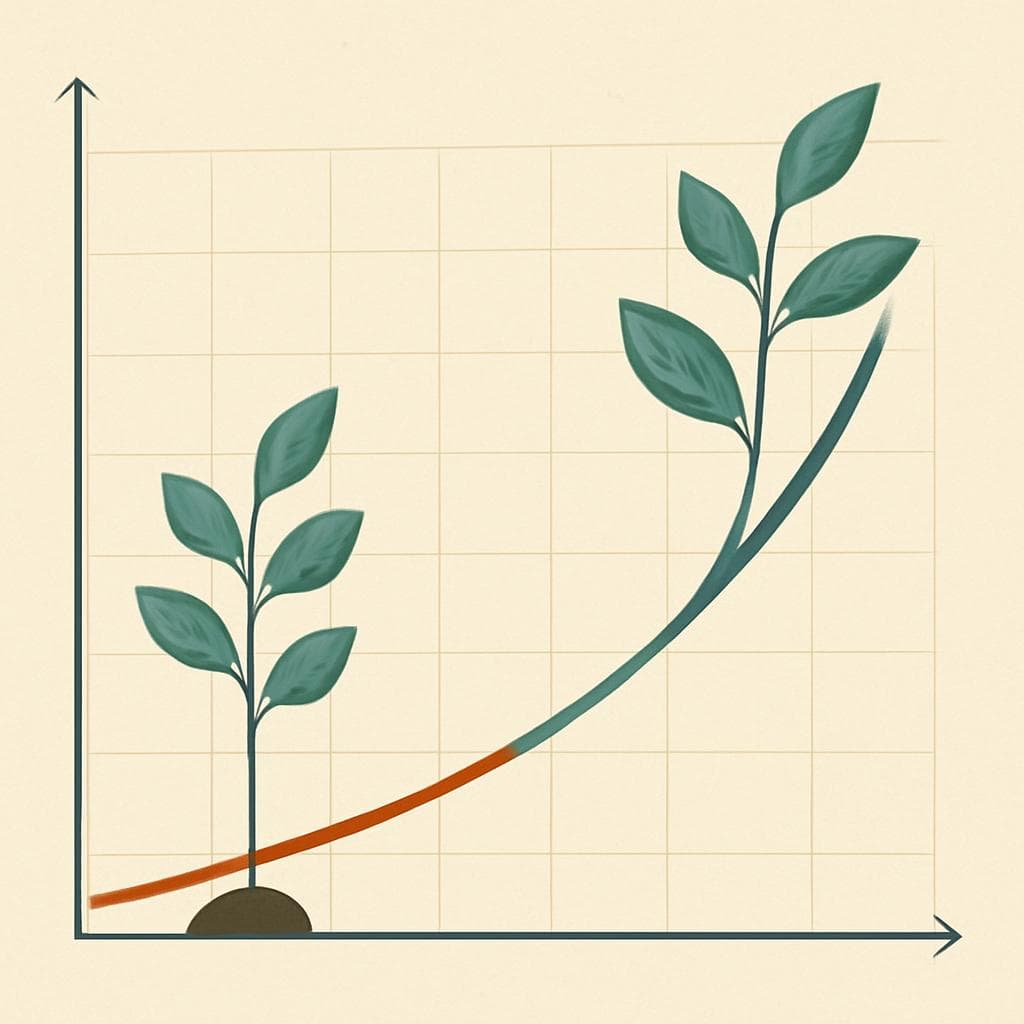
Compounding is often compared to a snowball rolling downhill. It starts small, but as it picks up more snow, it grows larger — and a larger snowball picks up even more snow with every rotation. The longer it rolls, the more dramatic the growth becomes.
This is why time is the secret ingredient. Stretch that same $1,000 out to 30 years at 10% compounded annually, and you're looking at over $17,400. Simple interest over the same period would give you just $4,000. The gap is staggering.
Compounding Frequency Matters Too
Compounding doesn't have to happen once a year. Many savings accounts and investments compound monthly, daily, or even continuously. The more frequently interest compounds, the faster your balance grows. A 10% annual rate compounded daily will slightly outperform the same rate compounded monthly, because your interest starts earning its own interest sooner.
The Double-Edged Sword
Compounding works against you just as powerfully when you're in debt. Credit cards typically compound interest daily on your outstanding balance. Miss payments or carry a balance, and the amount you owe can balloon quickly — for exactly the same reason your savings account grows. The math doesn't care which side of the ledger you're on.
Why This Actually Matters
Starting to save early — even with small amounts — puts compounding to work for longer. A 25-year-old who invests $5,000 and never adds another dollar will likely end up with more money at retirement than a 40-year-old who invests $20,000 at the same rate. Time in the market, powered by compounding, does the heavy lifting.
It's a genuinely simple concept with genuinely life-changing implications.