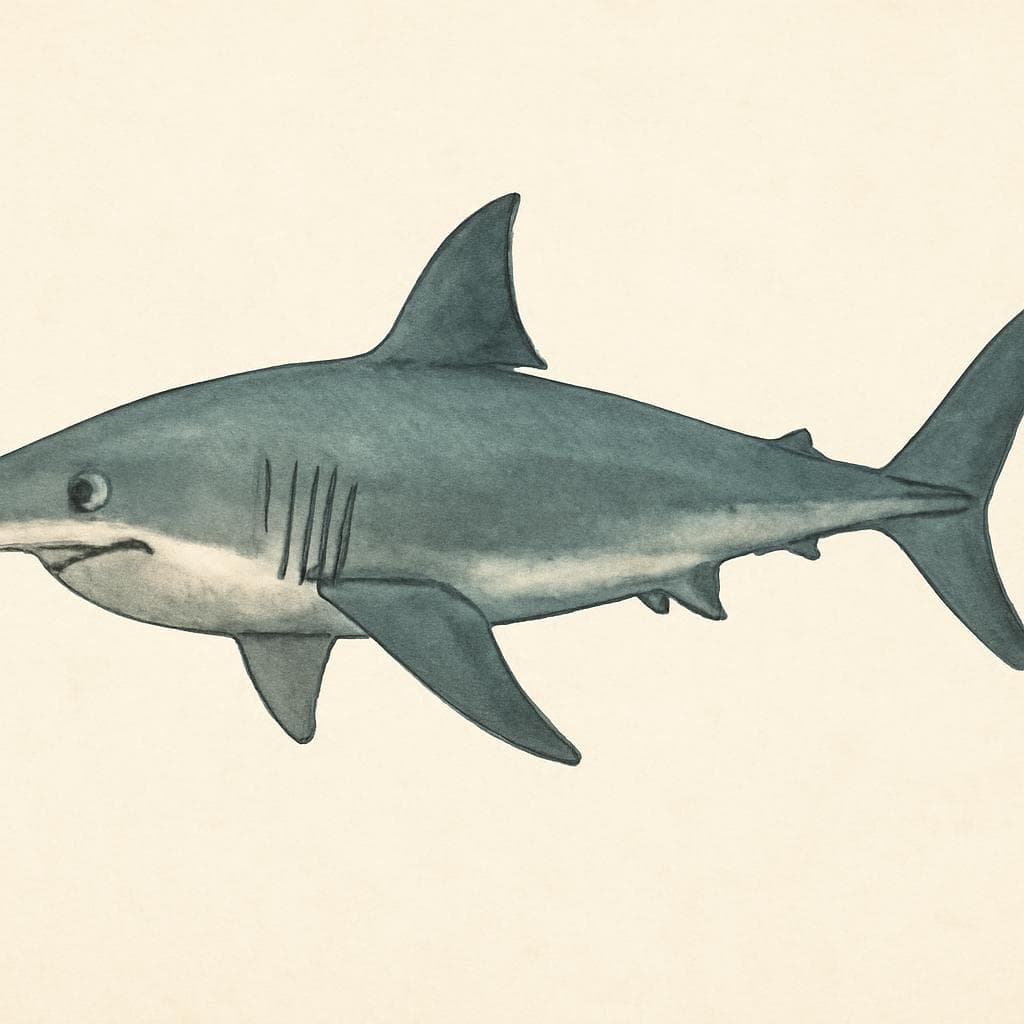
The Quiz Question
A shark is a fish
- A. True
- B. False
- C. Sometimes
- D. Only certain species
The answer is B. False. Here is the full story.
Wait — Sharks Aren't Fish?
It's one of those facts that sounds like it should be wrong. Sharks live in the ocean, they have fins, they breathe through gills, and they swim around eating things. That sounds pretty fishy. But when scientists talk about "fish," they're being more specific than you might think — and sharks fall into their own distinct category entirely.
What Actually Makes Something a Fish
When biologists classify animals, they draw a sharp line between two types of aquatic vertebrates: bony fish (Osteichthyes) and cartilaginous fish (Chondrichthyes). Bony fish — like salmon, tuna, or goldfish — have skeletons made of actual bone. Sharks belong to Chondrichthyes, meaning their entire skeleton is made of cartilage, the same flexible tissue that makes up your ears and nose.
That distinction matters enormously in biology. Sharks, rays, and skates form their own separate class of vertebrates. They share a common ancestor with bony fish, but they diverged from them roughly 450 million years ago — long before dinosaurs walked the Earth. Lumping sharks in with "fish" in a strict taxonomic sense would be a bit like calling a bat a bird because it flies.
So What Exactly Is a Shark?
Sharks are cartilaginous fish — a classification that separates them from the roughly 30,000 species of bony fish on the planet. Beyond their skeleton, they have several other features that set them apart. They lack a swim bladder, the gas-filled organ bony fish use to control buoyancy. Instead, sharks rely on their large, oil-rich livers to stay afloat. Some species must also keep swimming constantly just to breathe, since they rely on water moving over their gills rather than actively pumping it like bony fish do.
Their skin is another giveaway. Rather than traditional scales, sharks are covered in tiny tooth-like structures called dermal denticles, which reduce drag and make their skin feel like sandpaper if you run your hand the wrong way.
Ancient, Unique, and Wildly Diverse
There are more than 500 known species of sharks, ranging from the tiny dwarf lanternshark (small enough to fit in your hand) to the whale shark, which can reach 12 metres in length. Some give birth to live young. Some lay eggs. Some can survive in freshwater rivers. The goblin shark lurks in deep ocean trenches and looks like something from a fever dream.
Sharks have survived five mass extinction events. They were patrolling ancient oceans before trees even existed on land. These animals are far more than a subcategory of fish — they're an ancient, extraordinary lineage all their own, and they've been perfecting the art of survival for half a billion years.
So next time someone calls a shark "just a fish," you can politely — and correctly — disagree.