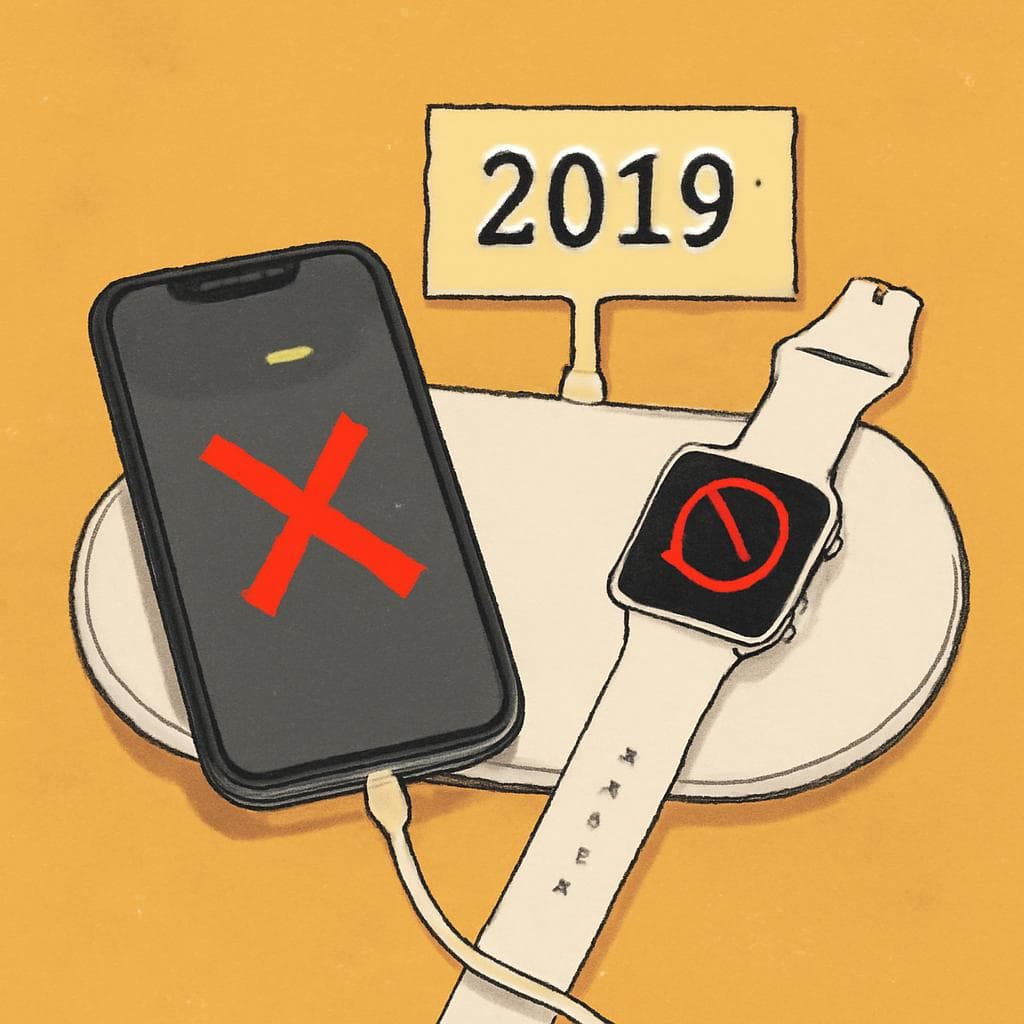
The Quiz Question
Why did Apple say it cancelled the AirPower charging mat in 2019?
- A. It could not meet its standards
- B. A shortage of charging cables
- C. A patent sale to Samsung
- D. A ban on wireless charging
The answer is A. It could not meet its standards. Here is the full story.
Apple's AirPower: The Ambitious Charger That Never Made It to Market
When Apple unveiled AirPower at its September 2017 iPhone event, it looked like the future. A single sleek mat that could simultaneously charge your iPhone, Apple Watch, and AirPods case — no fussing with cables, no hunting for the right plug. The crowd loved it. Apple slapped the AirPower name on iPhone packaging. Pre-orders practically seemed inevitable.
Then it just... disappeared.
Eighteen Months of Silence
After that splashy debut, Apple went unusually quiet about AirPower. Months passed with no release date, no price announcement, no product page. For a company that typically launches products within weeks of announcing them, this was a glaring red flag. Industry watchers and Apple enthusiasts grew increasingly suspicious that something had gone badly wrong behind the scenes.
They were right.
The Engineering Problem Apple Couldn't Crack
In March 2019, Apple officially killed the project. Senior Vice President Dan Riccio confirmed the cancellation in a statement, saying the product had "not achieved our high standards" and that Apple had "concluded AirPower will not achieve our high standards and we have cancelled the project."
That's corporate-speak, but the underlying engineering reality was genuinely brutal. AirPower was designed to let users place devices anywhere on the mat and charge them simultaneously — not in fixed spots, but freely. Achieving that required an unusually dense grid of overlapping charging coils packed into a thin, elegant surface.
The problem? All those coils generated significant heat when operating together. Managing that thermal output without the mat becoming dangerously warm — or throttling charging speeds to the point of uselessness — proved extraordinarily difficult. Reports from engineers and analysts suggested Apple simply couldn't solve the heat dissipation issue at the quality level it demanded for a consumer product.
Why Apple's Standards Actually Matter Here
It would be easy to dismiss "it didn't meet our standards" as a vague excuse, but Apple's standards in this area are genuinely rigorous. The company invests heavily in reliability testing, and a charging mat that ran hot or posed any risk to devices would have been a legal and reputational nightmare — especially after the Samsung Galaxy Note 7 battery scandal a few years earlier had made consumers acutely aware of consumer electronics fire risks.
Killing AirPower was almost certainly the right call, even if the announcement was painful for a company that rarely admits defeat so publicly.
The Legacy of a Product That Never Shipped
AirPower became a rare and somewhat legendary Apple failure — proof that even the world's most valuable tech company can bite off more than it can chew. It also sparked years of "it's coming back" rumors, and third-party manufacturers tried (with mixed results) to fill the gap with their own multi-device wireless mats.
Apple has never officially revived AirPower, though MagSafe and multi-device charging solutions have evolved considerably since. Sometimes the most interesting Apple story is the one that never had a launch day.