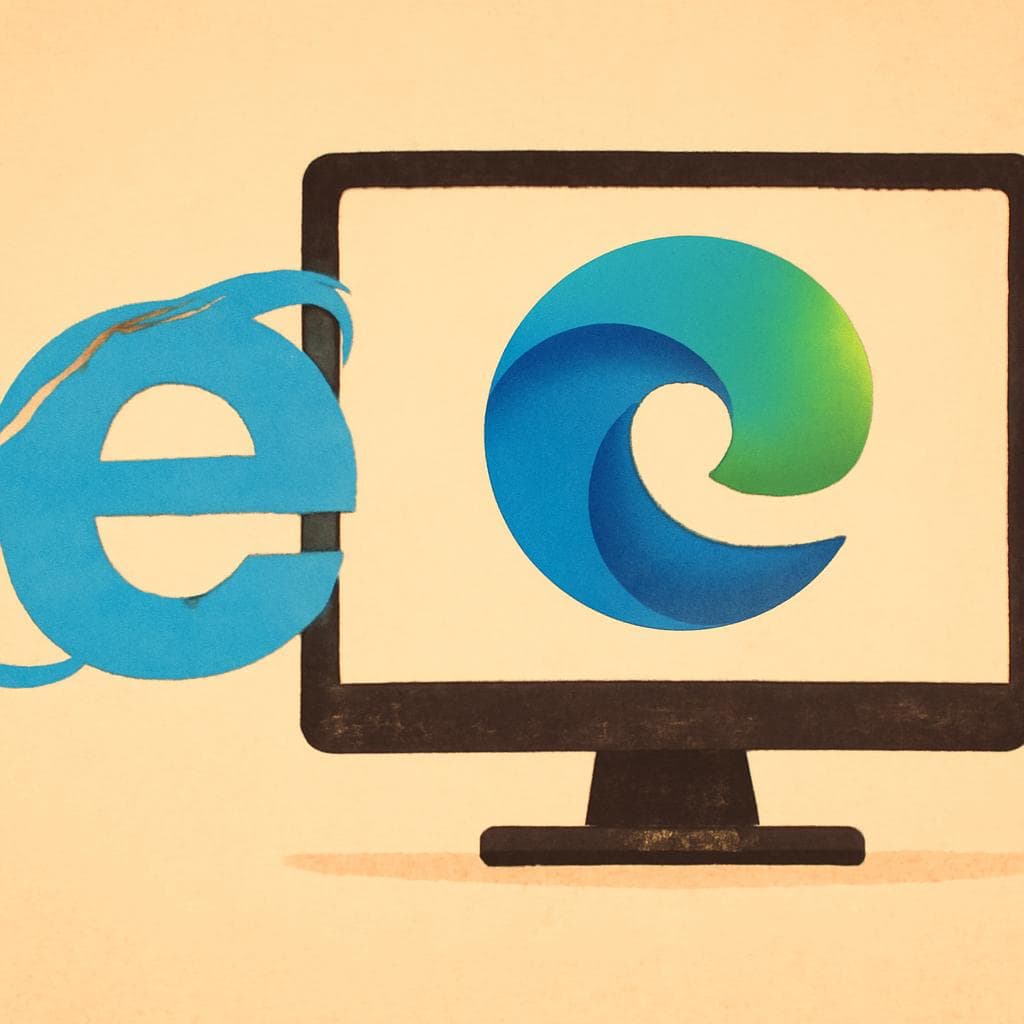
The Quiz Question
Which Microsoft browser replaced the retired Internet Explorer desktop app?
- A. Microsoft Edge
- B. Google Chrome
- C. Mozilla Firefox
- D. Apple Safari
The answer is A. Microsoft Edge. Here is the full story.
The End of an Era: Internet Explorer's Long Goodbye
On June 15, 2022, Microsoft officially pulled the plug on Internet Explorer 11, the desktop app that had been a fixture of Windows PCs since the mid-1990s. After more than 25 years of browsing history — pun intended — the iconic blue "e" was retired for good, and Microsoft Edge stepped in as its full replacement.
Why Microsoft Made the Switch
Internet Explorer didn't just quietly fade away — it had been struggling for years. Once the dominant browser with a market share above 90% in the early 2000s, IE slowly lost ground to competitors like Mozilla Firefox, Google Chrome, and Safari. By the time of its retirement, its global usage share had fallen to well under 1%. Websites and developers had largely moved on, with many modern platforms outright refusing to support it.
Microsoft itself had been nudging users toward Edge since 2015, when the browser launched alongside Windows 10. The message was clear: IE was legacy software being kept alive mostly for enterprise compatibility, not everyday browsing.
What Makes Microsoft Edge Different
The version of Edge that replaced Internet Explorer is not the original Edge that launched in 2015. Microsoft completely rebuilt it in 2020, this time using the same Chromium open-source engine that powers Google Chrome. That decision was a game-changer. The new Chromium-based Edge is fast, compatible with virtually every modern website, and supports the same extensions available in Chrome's Web Store.
Edge also brought genuinely useful features to the table — a built-in PDF reader, a reading mode that strips away clutter, vertical tabs, and a "Collections" tool for saving and organizing web content. It even includes a built-in AI assistant powered by Microsoft's Copilot technology, giving it a distinctly modern edge (again, pun intended) over what IE ever offered.
What Happened When You Tried to Open IE After Retirement
Microsoft didn't just leave a broken shortcut sitting on your desktop. After the retirement date, attempting to open Internet Explorer automatically redirected users to Microsoft Edge instead. The old IE app was effectively locked out of standard use, with Microsoft making clear that security patches and support were finished.
Certain enterprise features lingered a little longer through something called "IE mode" built into Edge — a compatibility tool that lets businesses run legacy web apps designed specifically for Internet Explorer without needing the old browser itself.
A Browser That Defined a Generation
Love it or hate it — and plenty of people had strong feelings both ways — Internet Explorer was the browser that introduced millions of people to the internet. It came pre-installed on Windows machines worldwide, making it the default gateway to the web for an entire generation. Microsoft Edge now carries that torch, built for a very different internet than the one IE helped create.