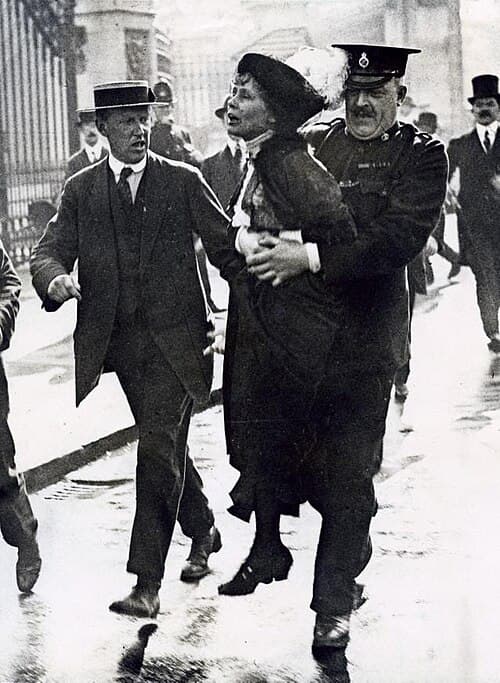
The Quiz Question
Who founded the Women's Social and Political Union, the militant suffragette movement, in Manchester in 1903?
The answer is Emmeline Pankhurst. Here is the full story.
Emmeline Pankhurst and the Birth of Militant Suffragette Politics
On 10 October 1903, a small group of women gathered in the Manchester home of Emmeline Pankhurst and made a decision that would shake British politics to its foundations. They founded the Women's Social and Political Union — the WSPU — an organisation whose motto, "Deeds, not words," signalled from the very start that this was something different. Something fiercer.
Emmeline Pankhurst was already a seasoned political activist when she launched the WSPU. Born in Manchester in 1858 to a family with radical leanings, she had been attending suffrage meetings since she was a teenager. She had watched the peaceful, petition-based campaign for women's votes drag on for decades with painfully little progress. Parliament ignored polite lobbying. She decided it was time to stop being ignored.
Why Manchester, and Why 1903?
Manchester was no accident. The city had a long tradition of radical politics — it was the birthplace of the Anti-Corn Law League and the site of the Peterloo Massacre. It was also home to a tight-knit network of working-class women in the labour movement, and Pankhurst wanted the WSPU to reflect that energy. The early membership drew heavily on factory workers and trade unionists, not just middle-class drawing-room campaigners.
The timing matters too. The Independent Labour Party, with which Pankhurst had been involved, was frustratingly slow to champion women's suffrage. She broke away to form an organisation solely focused on one goal: votes for women, pursued by any means necessary.
What Made the WSPU Different
Where earlier suffrage groups had relied on petitions and parliamentary lobbying, the WSPU escalated dramatically. Under Emmeline's leadership — and with the fierce energy of her daughters Christabel and Sylvia — members chained themselves to railings, smashed shop windows, set fire to postboxes, and staged hunger strikes in prison. The government responded with force-feeding, which only hardened public sympathy for the cause.
The word "suffragette" — as distinct from the older term "suffragist" — was actually coined as a taunt by a Daily Mail journalist in 1906. Pankhurst and her followers adopted it proudly, wearing it as a badge of honour alongside their signature purple, white, and green colours.
A Legacy That Changed History
The WSPU suspended its campaign during the First World War, throwing its support behind the war effort — a controversial decision that split the movement. But the groundwork had been laid. In 1918, women over 30 gained the vote. Full equal voting rights followed in 1928 — just weeks before Emmeline Pankhurst died, at the age of 69.
She never got to cast that fully equal ballot herself. But the organisation she founded in her Manchester parlour made sure future generations could.