The Quiz Question
Which politician founded London's Metropolitan Police in 1829, giving officers the nicknames 'bobbies' and 'peelers'?
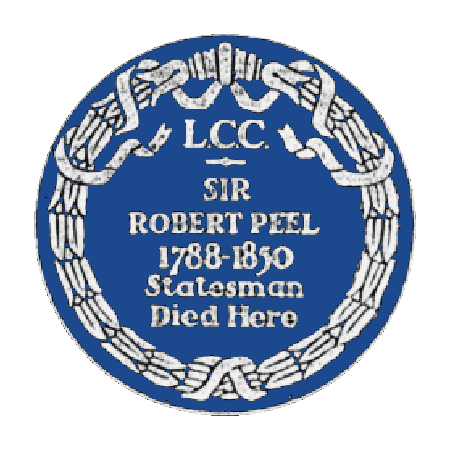
The answer is Sir Robert Peel. Here is the full story.
The Man Who Invented Modern Policing
Before 1829, London's law enforcement was a chaotic patchwork of parish constables, night watchmen, and the Bow Street Runners — a small, semi-professional force that was wildly inconsistent and hopelessly under-resourced for a city of nearly 1.5 million people. Crime was rampant, public order was fragile, and there was no unified body to keep the peace. That all changed when Sir Robert Peel pushed the Metropolitan Police Act through Parliament and launched an entirely new idea: a professional, full-time, centrally organised police force.
Who Was Sir Robert Peel?
Peel was one of the most consequential British politicians of the 19th century. Born in 1788 into a wealthy Lancashire cotton-manufacturing family, he was educated at Harrow and Oxford before entering Parliament at just 21. He served as Home Secretary twice and Prime Minister twice, and is also credited with founding the modern Conservative Party. But it is arguably his creation of the Metropolitan Police that left the deepest mark on everyday life in Britain — and eventually across the world.
His motivations were practical rather than idealistic. London's crime rates had soared alongside its population during the Industrial Revolution. The existing system simply couldn't cope. Peel believed a disciplined, visible, preventative force — rather than a reactive one — was the solution.
The Birth of the 'Bobbies'
When the Metropolitan Police launched on 29 September 1829, roughly 3,000 officers took to the streets in their distinctive blue tailcoats and top hats. The blue uniform was a deliberate choice — it distinguished officers from the military, who wore red, signalling that this was a civilian force serving the public rather than enforcing state power.
The nickname "bobbies" comes directly from Peel's first name, Robert — Bobby being a common diminutive at the time. The alternative nickname, "peelers", is simply drawn from his surname. Both terms stuck and are still used affectionately in British English today.
Peel's Principles of Policing
Peel articulated a philosophy of policing that was genuinely radical for its era. His guiding principle — often summarised as "the police are the public and the public are the police" — emphasised consent and community trust over brute authority. Officers were expected to earn legitimacy through behaviour, not simply demand it through power. These ideas, often called Peel's Nine Principles, still inform policing philosophy in democratic countries around the world.
A Legacy That Travelled the Globe
The Metropolitan Police model proved so effective that it was rapidly copied. New York City established its own professional police force along similar lines in 1845, followed by cities across Europe and the British Empire. The blueprint Peel drew up in a Westminster office nearly 200 years ago remains the foundation of modern civilian policing everywhere from Toronto to Sydney.
Not bad for a man whose name became slang for a copper.