The Quiz Question
What year did the US officially leave the gold standard?
- A. 1913
- B. 1944
- C. 1971
- D. 1999
The answer is C. 1971. Here is the full story.
Nixon's Bold Move That Changed the Global Economy
On the evening of August 15, 1971, President Richard Nixon interrupted regular Sunday night television programming to deliver one of the most consequential economic announcements in American history. In a single speech, he effectively dismantled the monetary system that had governed global finance for nearly three decades.
What the Gold Standard Actually Meant
For most of US history, the dollar was tied to gold at a fixed rate. Under the Bretton Woods Agreement of 1944, the United States pegged the dollar at $35 per ounce of gold, and other countries pegged their currencies to the dollar. It was a system built on trust — the world accepted dollars because, in theory, you could always exchange them for gold held in places like Fort Knox.
That promise worked beautifully when America was the undisputed economic powerhouse after World War II. But by the late 1960s, cracks were forming.
Why the System Was Breaking Down
The Vietnam War was expensive. So were Lyndon Johnson's Great Society social programs. The US was spending more than it was taking in, printing dollars to cover the gap. As more dollars flooded the world, foreign governments and central banks began to worry the US didn't have enough gold to back them all up. They started converting their dollar reserves into gold, and America's gold stockpile began draining fast.
By 1971, the situation had become a quiet crisis. Countries like France were aggressively exchanging dollars for gold. The US gold reserves had fallen dramatically, and speculators smelled blood in the water.
The "Nixon Shock"
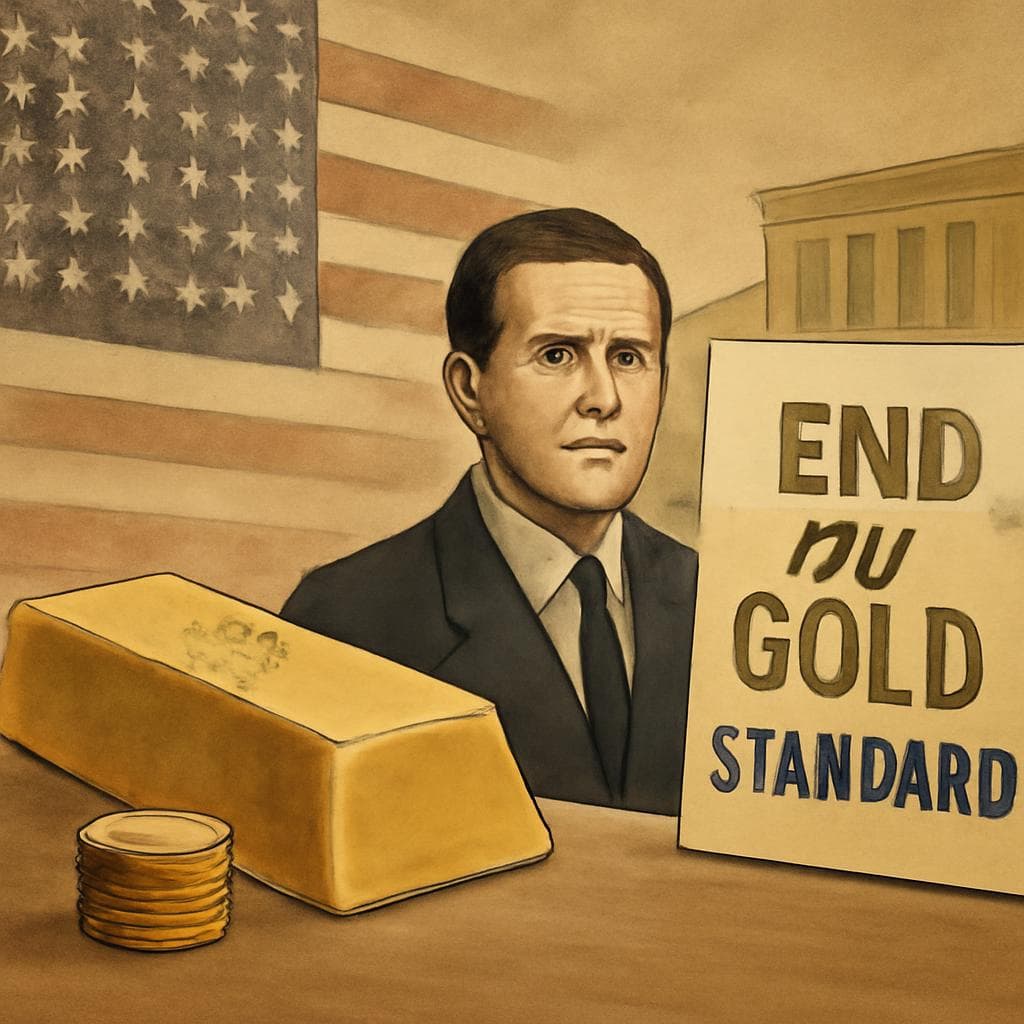
Nixon, advised by Treasury Secretary John Connally and economist Milton Friedman, decided to act unilaterally. He "closed the gold window," meaning the US would no longer convert foreign-held dollars into gold at any price. It was technically a temporary measure. It was never reversed.
The move sent shockwaves through global markets — hence the name economists later gave it: the Nixon Shock. Combined with wage and price controls and a 10% tariff on imports, it represented a dramatic reshaping of US economic policy overnight.
The World We Live in Now
The result was the modern system of fiat currency. Today, the dollar's value isn't backed by any physical commodity. It's backed by confidence in the US government and economy — full stop. All major world currencies now operate the same way.
Some economists credit the move with giving the US greater flexibility to manage its economy. Critics argue it unleashed inflation and removed an important financial discipline. The 1970s inflation crisis that followed did nothing to settle that debate.
Either way, 1971 stands as a genuine turning point. The rules of money itself changed, and most people watching their Sunday night TV didn't fully realize it until years later.