The Quiz Question
What triggered the Jacobite rising of 1745?
- A. A Scottish famine
- B. Charles Edward Stuart's attempt to restore the Stuart line to the throne
- C. English taxation of the Highlands
- D. A French declaration of war
The answer is B. Charles Edward Stuart's attempt to restore the Stuart line to the throne. Here is the full story.
Bonnie Prince Charlie and the Last Jacobite Gamble
In the summer of 1745, a young man with a romantic dream and a dangerously thin army stepped onto Scottish soil and set the British Isles on edge. Charles Edward Stuart — better known as Bonnie Prince Charlie — had sailed from France with just seven companions, determined to take back the throne he believed was rightfully his family's. What followed became one of the most dramatic and ultimately heartbreaking episodes in British history.
The Stuart Claim
The Stuart dynasty had been driven from power in 1688 when the Protestant William of Orange replaced the Catholic King James II in what became known as the Glorious Revolution. James's supporters — called Jacobites, from Jacobus, the Latin for James — never accepted that outcome. For decades they plotted, schemed, and occasionally rebelled to restore the Stuart line. Charles was the grandson of James II, and his father James Francis Edward Stuart (the "Old Pretender") had already made a failed attempt in 1715. Now it was Charles's turn.
The '45 Rising
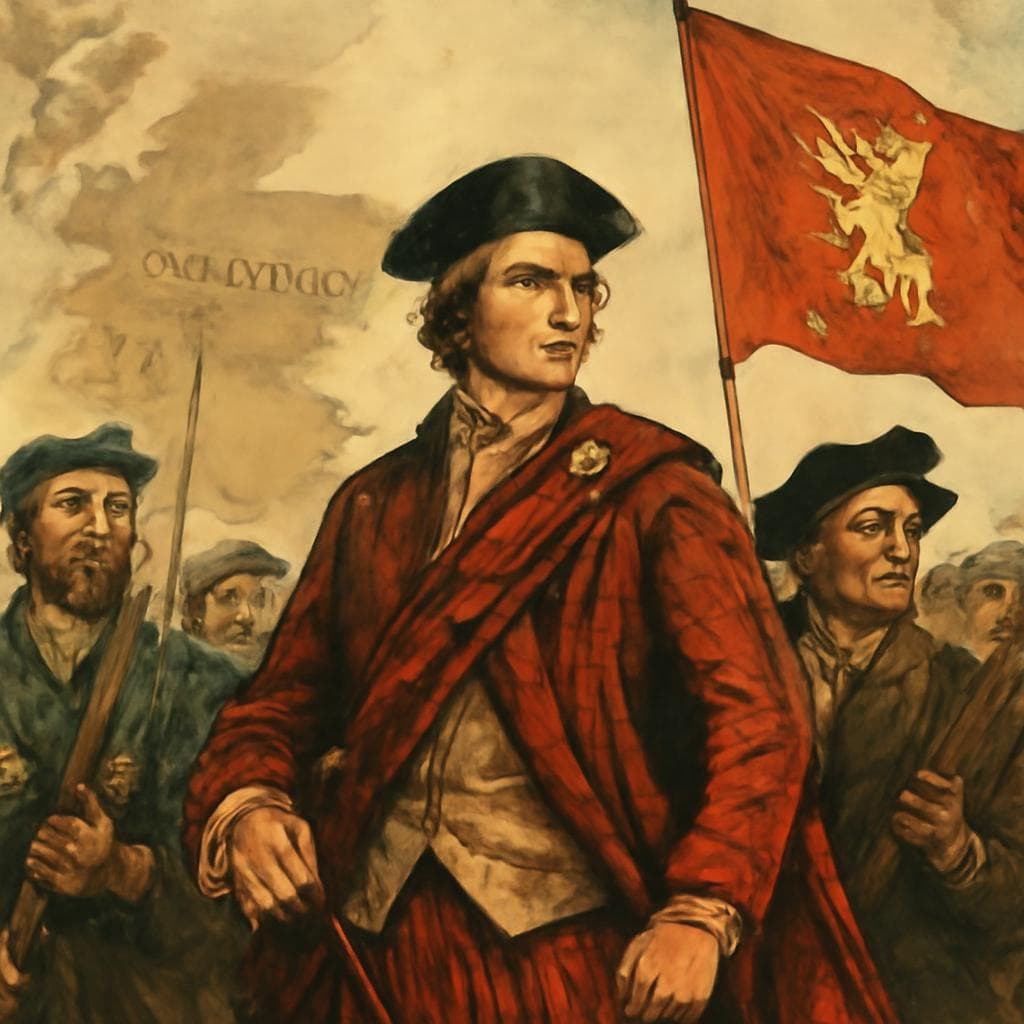
Charles landed on the Hebridean island of Eriskay on 23 July 1745 with almost no military support — he had been hoping for French troops that never fully materialised. Despite the inauspicious start, he raised the Stuart standard at Glenfinnan on 19 August and quickly gathered Highland clan support. His forces captured Edinburgh in September and routed a government army at the Battle of Prestonpans in just fifteen minutes.
Emboldened, he marched south into England, reaching as far as Derby by December 1745 — close enough to send London into a genuine panic. But the expected English Jacobite uprising never materialised, French reinforcements didn't arrive, and his commanders pressed him to retreat. That decision proved fatal to the cause.
Culloden and the Aftermath
The rising ended in catastrophe on 16 April 1746 at the Battle of Culloden, near Inverness. In under an hour, government forces under the Duke of Cumberland destroyed the Jacobite army. It was the last pitched battle ever fought on British soil. The government's reprisals were brutal — Highland culture was systematically dismantled, with clan tartans and bagpipes banned under the Act of Proscription.
Charles escaped into a five-month Highland fugitive adventure before fleeing to France, famously aided by Flora MacDonald. He never returned to Scotland and spent the rest of his life in European exile, increasingly dissolute and embittered.
Why It Still Resonates
The '45 carries such emotional weight because it blends genuine political stakes with an almost novelistic story — a charismatic prince, loyal Highlanders, impossible odds, and ultimate tragedy. It marked the end of any realistic Stuart restoration and the beginning of the transformation of Highland Scotland forever. Charles's dream died at Culloden, but the legend has never really faded.