The Quiz Question
In May 1915, a German U-boat torpedoed which British ocean liner, killing nearly 1,200 people and outraging the world?
- A. The Titanic
- B. The Britannic
- C. The Lusitania
- D. The Mauretania
The answer is C. The Lusitania. Here is the full story.
The Sinking of the Lusitania: A Tragedy That Shook the World
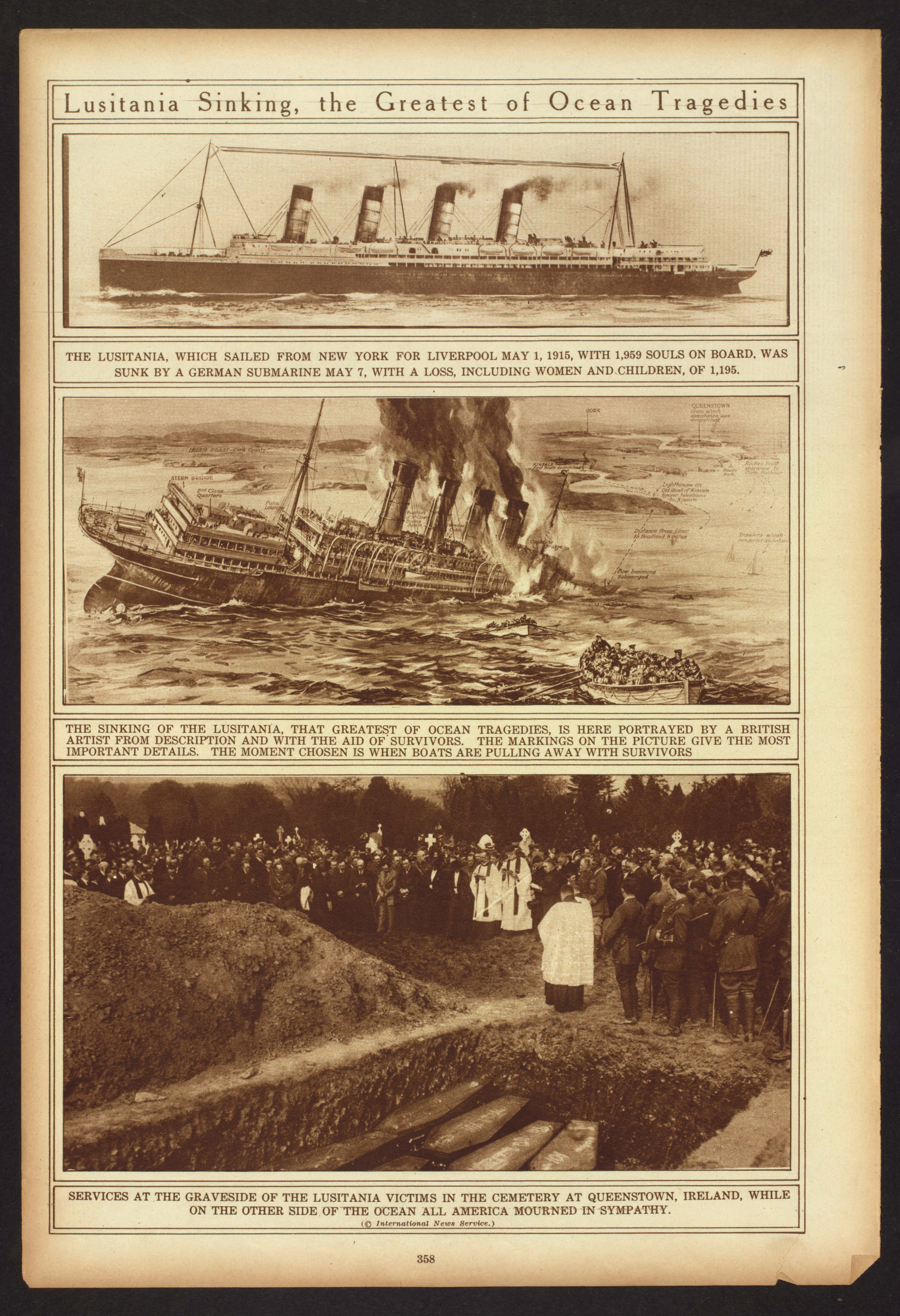
On the afternoon of 7 May 1915, passengers aboard the RMS Lusitania were enjoying the final stretch of a transatlantic voyage from New York to Liverpool. Many were looking forward to arriving in Britain the next day. They never made it. At 2:10 pm, a single torpedo fired from the German submarine U-20 struck the liner's starboard side. Within just 18 minutes, one of the most famous ships in the world had vanished beneath the waves off the southern coast of Ireland.
A Ship of Its Time
The Lusitania was no ordinary vessel. Built by Cunard and launched in 1906, she was a marvel of Edwardian engineering — one of the fastest and most luxurious ocean liners afloat. She had even held the Blue Riband, the informal prize for the fastest Atlantic crossing. In peacetime she was a floating palace; by 1915, she was sailing through some of the most dangerous waters on earth.
World War One had been raging for nearly a year, and Germany had declared the waters around Britain a war zone. German submarines had orders to sink enemy vessels on sight. Controversially, the Imperial German Embassy in the United States had even taken out newspaper advertisements warning travellers that sailing on ships flying a British flag was a risk. Many people ignored the warnings. They would pay a terrible price.
Eighteen Minutes of Terror
Of the 1,962 people on board, 1,198 died — including 128 American citizens. The death toll was catastrophic partly because the ship sank so quickly. There was barely enough time to launch the lifeboats properly, and many capsized in the chaos. The rapid sinking also suggested a secondary explosion inside the ship, a detail that has fuelled debate among historians ever since. Some believe munitions in the cargo hold detonated; others point to steam or coal dust. The exact cause remains contested to this day.
The Political Shockwave
The international reaction was swift and fierce. Newspapers around the world ran horrified front pages. In the United States — still officially neutral at this point — public outrage was enormous. The deaths of American civilians made it suddenly very difficult for President Woodrow Wilson to maintain a stance of detached neutrality.
Germany argued the Lusitania was carrying war materials and was therefore a legitimate military target. While it's true the ship carried rifle ammunition in its cargo, the moral argument cut little ice with a grief-stricken public. The sinking became one of the most powerful propaganda tools of the entire war, used relentlessly to recruit soldiers and stoke anti-German sentiment.
A Turning Point in History
The Lusitania didn't immediately drag America into the war — that would take until 1917 — but it fundamentally shifted the mood. It planted a seed of outrage that eventually bore fruit. Today the wreck lies in about 93 metres of water off County Cork, Ireland, a protected site and a permanent memorial to the 1,198 souls lost in those eighteen terrible minutes.