The Quiz Question
Constantine the Great was proclaimed Roman emperor in the British city of York because of what?
- A. He won a gladiatorial tournament there
- B. His father Constantius died there and the army acclaimed him on the spot
- C. He was born in York
- D. The Senate ordered it
The answer is B. His father Constantius died there and the army acclaimed him on the spot. Here is the full story.
A Death in York That Changed the Roman World
On 25 July AD 306, a man died in the northern English city of York — and in doing so, accidentally set one of history's most consequential chain reactions in motion. That man was Constantius I, co-emperor of Rome, and his death on campaign in Britain handed his son Constantine a moment that would reshape an entire civilization.
Why Was Constantine Even in Britain?
Constantine had been serving at the court of the senior emperor Diocletian in the East, effectively held there as a political hostage to ensure his father's loyalty. When Constantius fell seriously ill, Constantine managed to slip away and race to his father's side. He reached Eboracum — the Roman name for York — just in time. Constantius was leading a military campaign against the Picts in Caledonia (modern Scotland), and York served as the main Roman military base in northern Britain, garrisoned by some of the empire's most battle-hardened legions.
The Army Makes Its Choice
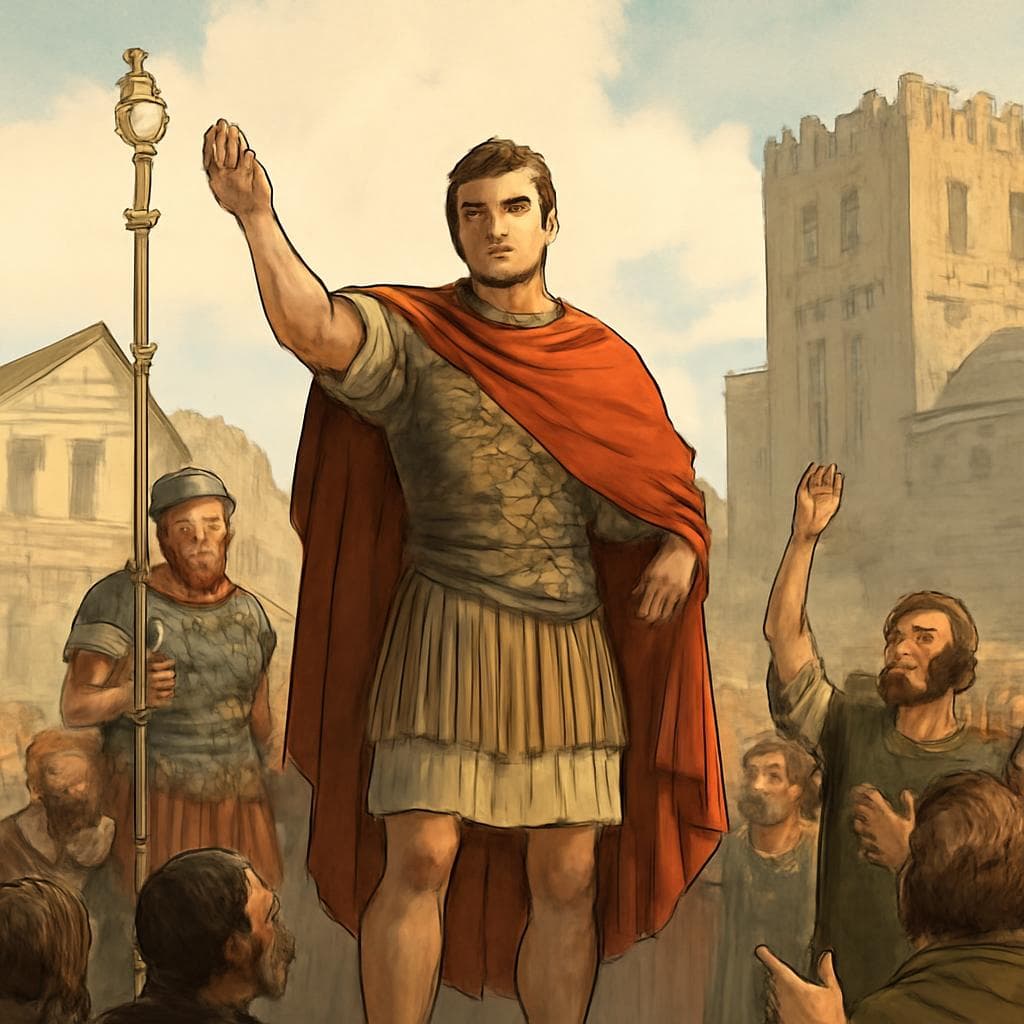
When Constantius died, the succession was far from automatic. Rome at the time operated under the Tetrarchy — a system of four co-rulers established by Diocletian — and the "correct" procedure would have been for the senior emperors to appoint a successor. But the troops on the ground had other ideas. Soldiers respected loyalty, strength, and lineage. Constantine was standing right there, the son of their recently deceased commander, and he had already proven himself in battle. The legions stationed at York, along with the Germanic Alemanni troops who had accompanied Constantius, proclaimed Constantine Augustus on the spot.
It was a classic Roman army acclamation — spontaneous, loud, and politically explosive.
A Shaky Start to an Extraordinary Reign
The other emperors were not pleased. Galerius, the dominant ruler in the East, refused to recognise Constantine as a full Augustus and instead offered him the lesser title of Caesar. Constantine shrewdly accepted, biding his time. Over the next eighteen years, through a brutal series of civil wars, he systematically outmaneuvered and defeated every rival until, by AD 324, he stood as sole ruler of the entire Roman Empire.
Why York Matters More Than People Realise
It is genuinely remarkable that one of history's most transformative rulers — the man who legalised Christianity across the empire, founded Constantinople, and redrew the map of European culture — had his story launched from a Roman garrison town in northern England. There is a statue of Constantine outside York Minster today, a quiet nod to the extraordinary moment when a grieving army looked at the son of their fallen general and decided, right there and then, that he would rule the world.
They were not wrong.