The Quiz Question
Britain launched the Battle of the Somme in 1916 mainly to achieve what?
- A. Relieve French forces under attack at Verdun
- B. Capture the port of Antwerp
- C. Push Germany out of Belgium entirely
- D. Force the United States into the war
The answer is A. Relieve French forces under attack at Verdun. Here is the full story.
Why Britain Launched the Battle of the Somme
By the summer of 1916, the French Army was bleeding to death at Verdun. Since February, German forces had been hammering the fortress city in a brutal campaign of attrition, and French commanders were running out of men. It was in this desperate context that Britain stepped up — launching one of the most devastating offensives in military history along the River Somme in northern France.
The Crisis at Verdun
German Chief of Staff Erich von Falkenhayn had designed the Verdun offensive with a chilling logic: not necessarily to capture the city, but to "bleed France white." The plan was working. By mid-1916, France had suffered around 315,000 casualties at Verdun, and French Commander-in-Chief Joseph Joffre was urgently pressing his British allies to act. He needed relief — and he needed it fast.
Field Marshal Sir Douglas Haig and the British Expeditionary Force answered the call. The original plan had been for a joint Anglo-French attack along the Somme, with the French contributing the larger share of troops. But Verdun had consumed so many French soldiers that Britain ended up carrying the main burden. What began as a collaborative operation became largely a British show.
The Bloodiest Day in British Military History
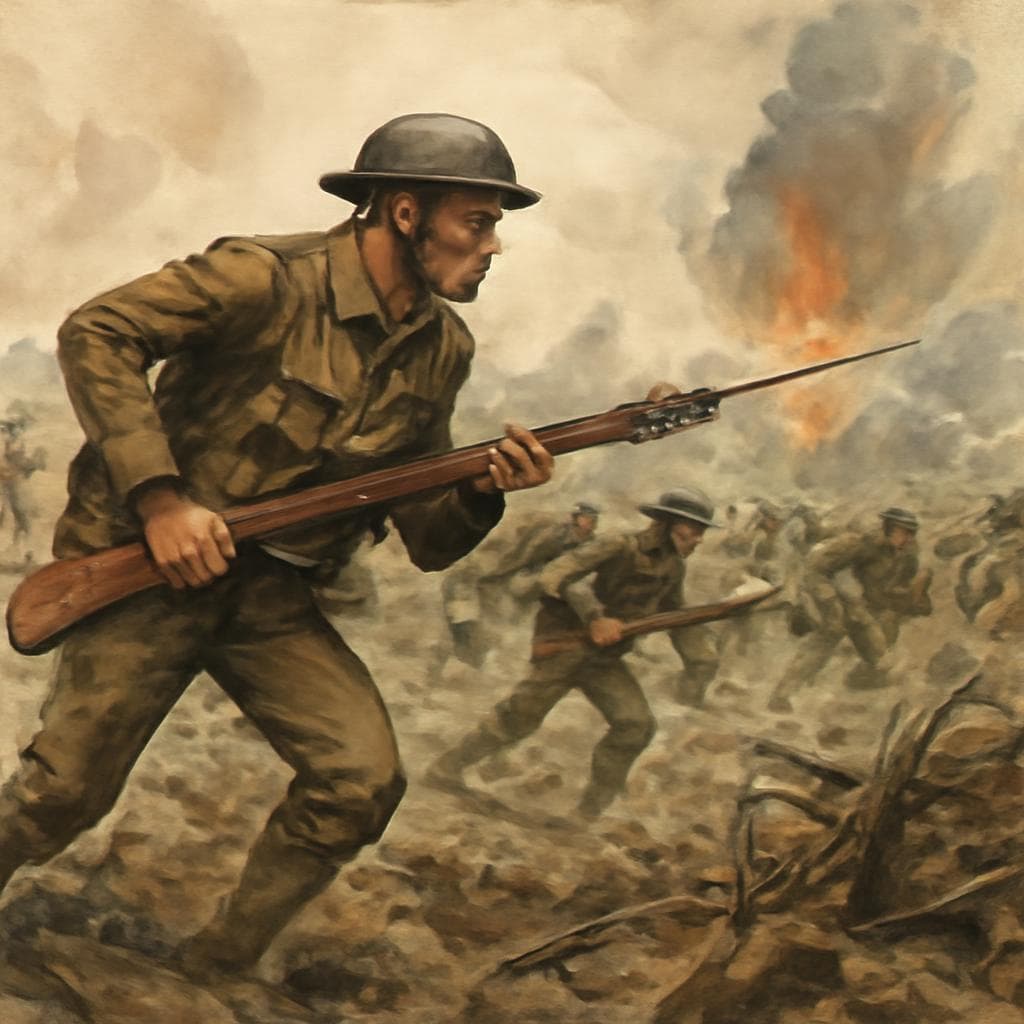
The offensive opened on 1 July 1916, following a week-long artillery bombardment that was supposed to destroy German defenses. It didn't. German soldiers sheltered in deep underground bunkers, then emerged as soon as the shelling stopped. British infantry, advancing in waves across No Man's Land, were cut down by machine gun fire. By the end of that single day, the British Army had suffered approximately 57,470 casualties — around 19,240 of them killed. It remains the bloodiest day in British military history.
Did It Work?
Despite the catastrophic losses, the Somme did achieve its core strategic purpose. German forces were forced to divert men and resources away from Verdun to hold the Somme front, easing the pressure on France at a critical moment. The French Army, though severely weakened, survived. Verdun eventually stabilized, and France remained in the war.
The Somme offensive ground on until November 1916, resulting in over one million total casualties across all sides. British and Commonwealth forces gained a maximum of about seven miles of territory — a horrifying exchange by any measure.
A Complicated Legacy
The Battle of the Somme is often remembered primarily as a symbol of futility and slaughter, and that reputation is not undeserved. But it's worth remembering the strategic reality that drove it: France was on the brink, and Britain stepped forward to share the burden. The alliance held. The war continued. Whether the price paid was worth it remains one of history's most contested questions.