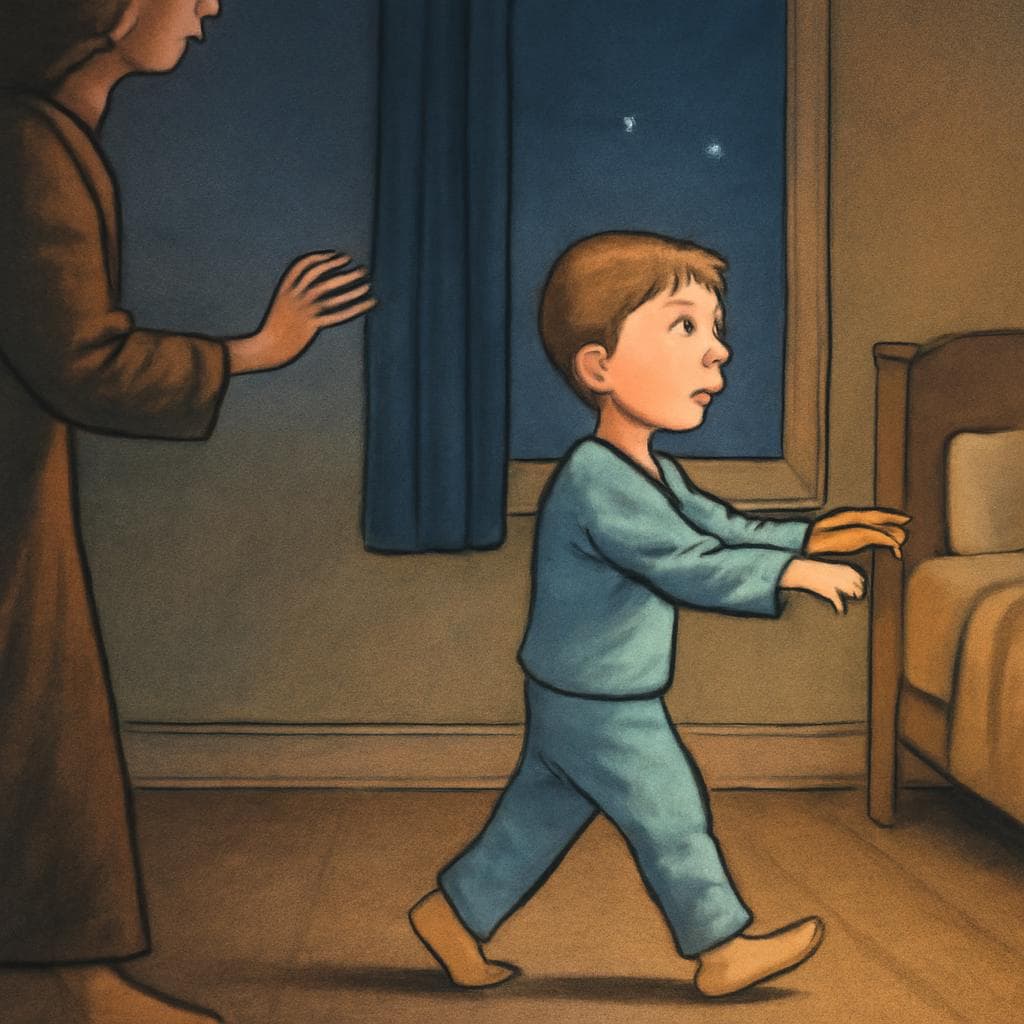
The Quiz Question
You should never wake a sleepwalking child.
- A. True
- B. False
The answer is B. False. Here is the full story.
The Sleepwalking Myth That Won't Stay Asleep
You've probably heard it said with total confidence at some point: "Never wake a sleepwalker — it could kill them, or drive them mad!" It sounds like the kind of rule that must have a serious medical reason behind it. The truth, though, is that it's one of the most persistent health myths around, and it's completely false.
Where Did the Myth Come From?
The idea has been floating around for centuries, possibly rooted in older beliefs that the soul leaves the body during sleep. Waking someone mid-wander was thought to leave the soul with nowhere to return to. Obviously, we now know that's not how human biology works — but the warning stuck around long after the superstition faded, passed down through generations as folk wisdom.
What Actually Happens If You Wake a Sleepwalker?
Waking a sleepwalker is safe. Full stop. It won't cause a heart attack, psychological damage, or any lasting harm. What it will likely cause is confusion and disorientation, because the person is being pulled out of a deep stage of non-REM sleep — specifically slow-wave sleep, where sleepwalking occurs. They may be groggy, bewildered, or briefly anxious. That's it.
In children especially, this grogginess — sometimes called "sleep inertia" — can look dramatic. A child might cry, seem confused, or not recognize where they are for a minute or two. This reaction is probably what fuelled the myth in the first place. It looks alarming, but it passes quickly and causes no harm.
When Waking Them Is Actually the Right Call
If a sleepwalking child is heading toward a staircase, a hot stove, or an unlocked front door, waking them is absolutely the right thing to do. Sleepwalkers have no conscious awareness of their surroundings, which is what makes the behavior potentially dangerous in the first place. The real risk isn't in waking them — it's in not intervening when they're heading somewhere unsafe.
The NHS and sleep specialists generally agree: gently guide the sleepwalker back to bed if possible, since that's the least disruptive option. But if guiding them isn't working or there's an immediate hazard, waking them calmly is completely fine.
Tips for Handling Sleepwalking Safely
For parents dealing with a child who sleepwalks regularly, the advice from sleep experts is practical: keep the bedroom environment safe, use stair gates, ensure windows are locked, and remove sharp or breakable objects from the path they typically take. Sleepwalking in children is also quite common — studies suggest up to 15% of kids sleepwalk at some point — and most grow out of it naturally.
So next time someone repeats the old warning with absolute certainty, you can set the record straight. Waking a sleepwalker won't hurt them — the real danger is the myth itself, which stops people from intervening when they should.