The Quiz Question
Who is credited with inventing the concept of kindergarten?
- A. Maria Montessori
- B. Friedrich Froebel
- C. Jean Piaget
- D. Rudolf Steiner
The answer is B. Friedrich Froebel. Here is the full story.
The Man Who Invented Kindergarten
Before Friedrich Froebel came along, young children were either kept at home or thrown into formal schooling that treated them like miniature adults. Froebel looked at that situation and decided the whole approach was wrong. His solution changed early childhood education forever.
A Garden for Children
In 1837, Froebel opened a new kind of institution in Bad Blankenburg, a small town in what is now Germany. He called it the Kindergarten — literally "children's garden" in German. The name was deliberate and poetic. Just as a garden nurtures plants by giving them the right conditions to grow naturally, Froebel believed young children needed a nurturing environment that worked with their natural development, not against it.
This was a genuinely radical idea for the time. Froebel was pushing back against rigid, rote-memorization schooling that dominated the era. He argued that play wasn't a distraction from learning — it was learning.
The Philosophy Behind the Play
Froebel was deeply influenced by Swiss educator Johann Heinrich Pestalozzi, under whom he had studied. But Froebel took things further. He developed a set of educational toys he called "Gifts" — carefully designed objects like balls, blocks, and cylinders meant to help children explore concepts like shape, pattern, and relationship through hands-on experience.
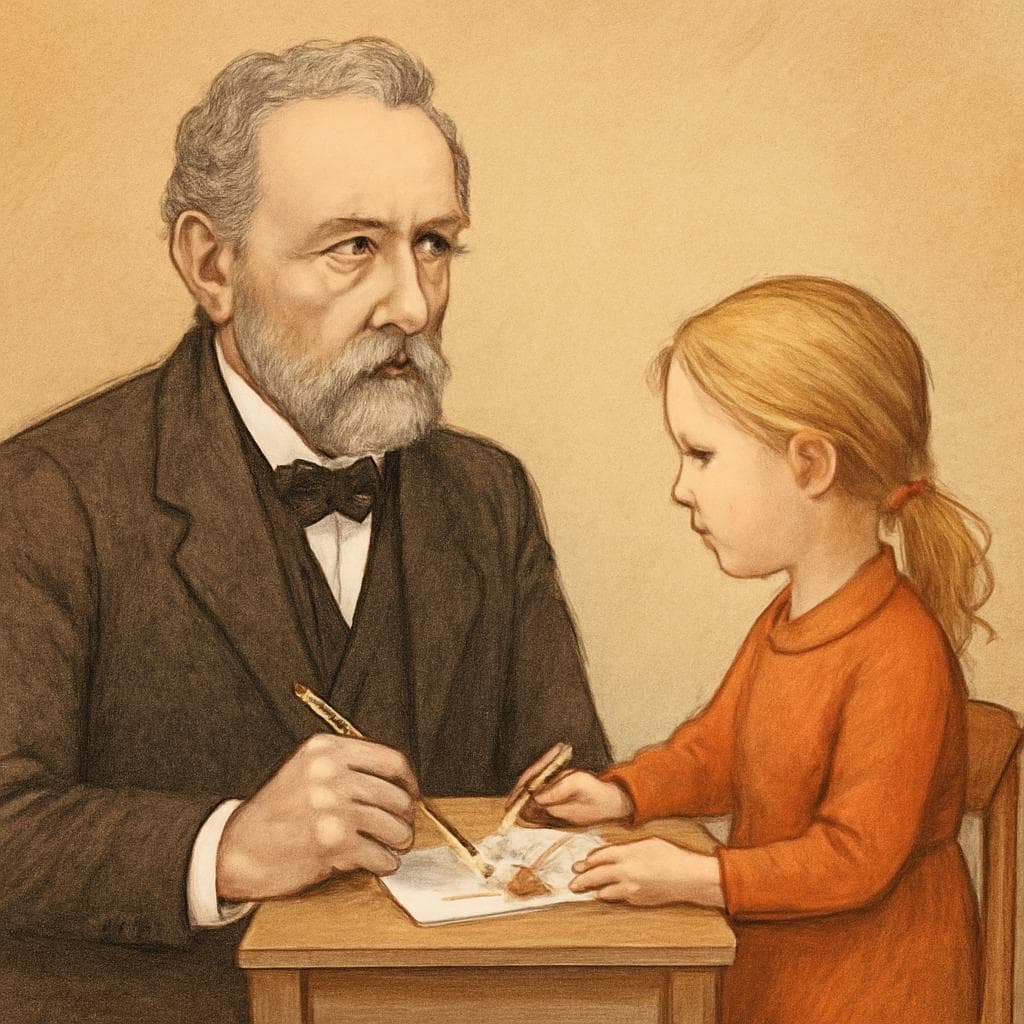
He also introduced structured activities he called "Occupations," which included drawing, weaving, and clay modeling. Every activity had an intentional purpose rooted in helping the child connect to the world around them. This wasn't babysitting — it was a fully developed educational philosophy.
A Surprisingly Controversial Legacy
Froebel's ideas were popular enough to spread quickly across Europe and eventually to the United States, where the first American kindergarten opened in Watertown, Wisconsin in 1856, founded by Margarethe Schurz, a German immigrant trained in Froebel's methods.
But back in Prussia, authorities actually banned kindergartens in 1851, fearing the progressive, child-centered philosophy was politically subversive. The ban lasted until after Froebel's death in 1852.
Why His Influence Still Matters
Modern early childhood education — with its emphasis on play-based learning, social development, and hands-on exploration — traces a direct line back to Froebel's ideas. Concepts that feel completely obvious today, like letting kids learn through play or using physical objects to teach abstract ideas, were genuinely innovative in the 1830s.
It's also worth noting that Froebel's influence extended into architecture and art. Frank Lloyd Wright famously credited Froebel's geometric "Gifts" with shaping his visual thinking as a child. Not bad for a set of wooden blocks.
Froebel didn't just invent a type of school. He invented a new way of thinking about childhood itself — and that idea has proven remarkably hard to uproot.