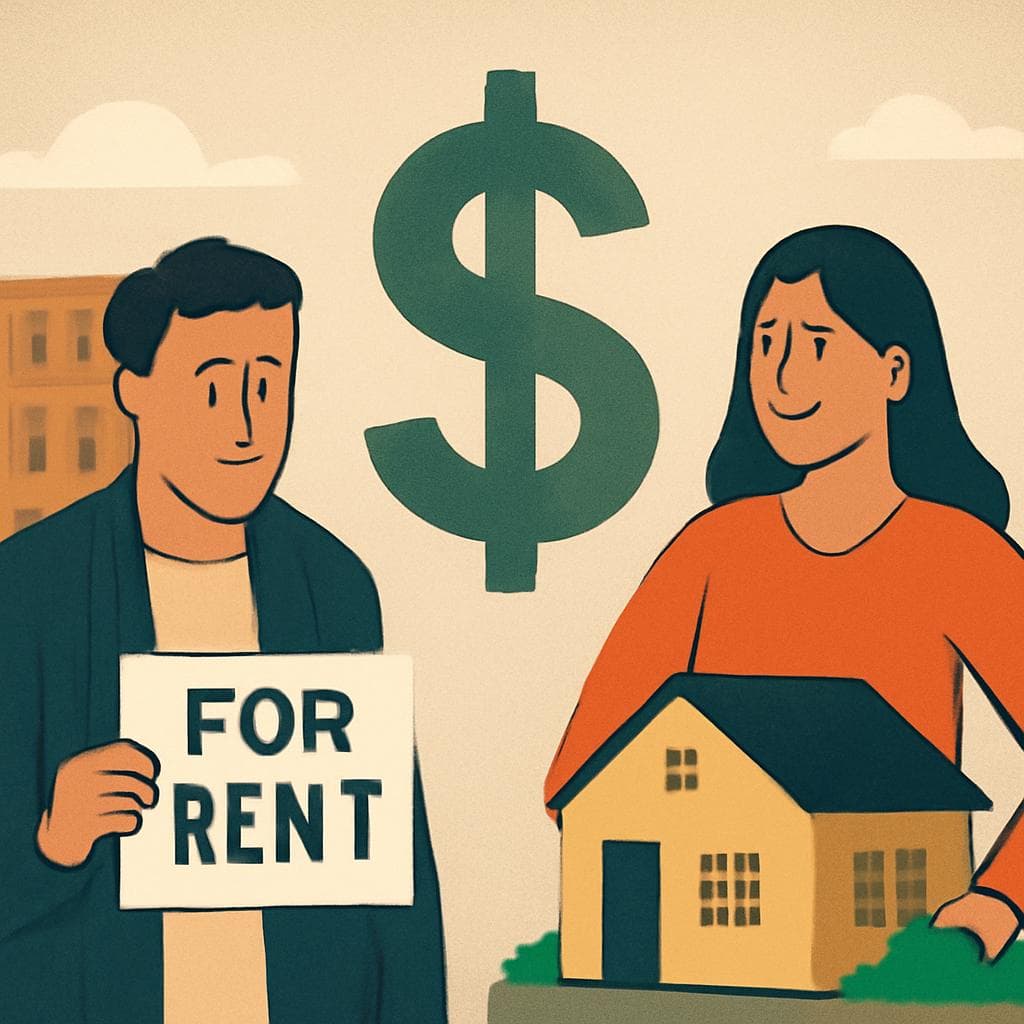
The Quiz Question
Renting is always a waste of money compared to buying.
- A. True
- B. False
- C. It depends
- D. Not sure
The answer is B. False. Here is the full story.
The Rent vs. Buy Debate Is More Complicated Than You Think
It's one of the most persistent pieces of financial advice passed down through generations: buying a home is always smarter than renting. Homeownership gets treated as the gold standard of adulting, while renting gets dismissed as "throwing money away." But that framing is misleading — and in many situations, completely wrong.
Why the "Throwing Money Away" Argument Falls Apart
When you rent, yes, you pay a landlord and don't build equity. But when you buy, you're not just paying down a mortgage. You're also paying property taxes, homeowner's insurance, maintenance costs (typically estimated at 1–2% of a home's value per year), HOA fees, and mortgage interest — especially heavy in the early years of a loan. These are costs you never get back either. They're just less visible.
A homeowner who buys a $400,000 house with a 30-year mortgage at 7% interest will pay roughly $558,000 in interest alone over the life of the loan. Add in maintenance, insurance, and taxes, and the total cost of ownership climbs significantly before a single dollar of equity feels real.
Location and Timing Change Everything
The math on renting versus buying is deeply tied to local market conditions. In cities like San Francisco, New York, or Sydney, sky-high purchase prices mean the monthly cost of owning the same property can be dramatically higher than renting it. Economists use a measure called the price-to-rent ratio — dividing a home's price by its annual rent — to assess which option makes more financial sense in a given market. A ratio above 20 generally favors renting.
Time horizon matters just as much. Buying typically only "wins" financially if you stay in a property long enough to offset transaction costs — real estate agent commissions, closing costs, moving expenses. These can easily total 8–10% of a home's value. If you sell after two or three years, you may barely break even, even if prices rose.
Renting Offers Real Financial Advantages
Renting offers flexibility that has genuine monetary value. Job opportunities, life changes, or simply finding a better neighbourhood become far easier to act on when you're not anchored to a mortgage. Renters also carry zero exposure to falling property markets — a real risk, as anyone who bought in 2006 and sold in 2009 knows painfully well.
The money not tied up in a down payment can also be invested. Over long periods, a diversified stock portfolio has historically outperformed real estate returns in many regions, particularly when you factor in ownership costs.
The Bottom Line
Buying a home can absolutely be a smart financial move — but it depends on your local market, how long you plan to stay, your financial stability, and what you'd do with the alternative capital. Renting isn't a failure. Sometimes it's the sharper choice. The "always" in this question is what makes it false.