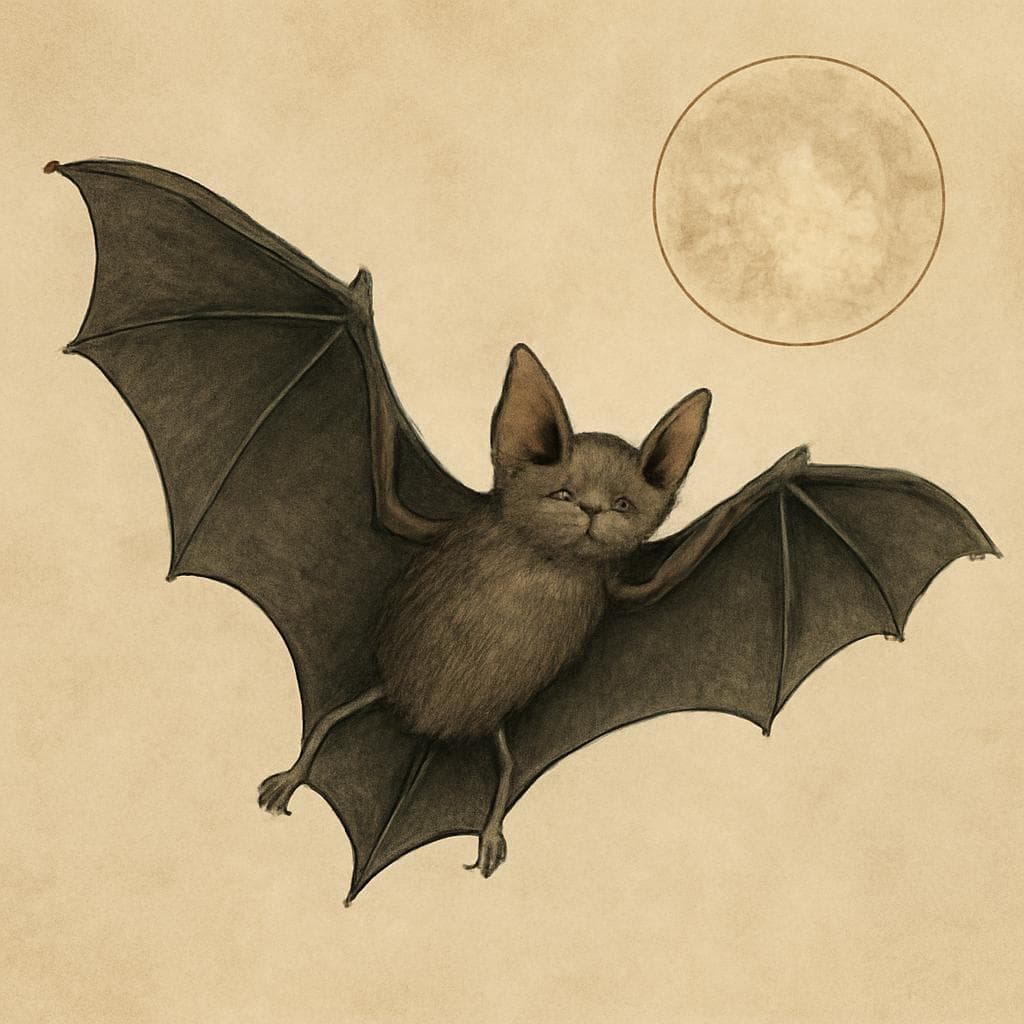
The Quiz Question
Bats are blind
- A. True
- B. False
- C. Sometimes
- D. Unknown
The answer is B. False. Here is the full story.
The "Blind as a Bat" Myth, Busted
Few phrases in the English language are as confidently wrong as "blind as a bat." It's repeated so often that most people accept it as simple biological fact. It isn't. Not even close.
Every single one of the roughly 1,400 known bat species can see. In fact, many of them see quite well. The misunderstanding likely comes from the fact that bats are nocturnal and famous for using echolocation — a biological sonar system — to navigate in darkness. People assumed that if bats could "hear" their way around, they must not bother with eyes. That's not how biology works.
What Echolocation Actually Does
Echolocation is a remarkable tool. Bats emit high-frequency sound pulses and listen to the echoes that bounce back from objects around them. This allows them to detect insects, branches, and obstacles in complete darkness with extraordinary precision. Some species can identify an object as thin as a human hair in total blackness.
But echolocation is a supplement to vision, not a replacement for it. Bats use both systems, often switching between them depending on the situation and lighting conditions.
Megabats: Actually Great at Seeing
The bat world is divided into two broad groups: microbats and megabats (also called fruit bats or flying foxes). Megabats, which include the large fruit-eating species with fox-like faces, have excellent eyesight and rely on it heavily. Many of them don't even use echolocation at all. They navigate primarily by sight and smell, much like birds do.
The Egyptian fruit bat, for example, has large, prominent eyes built for low-light vision. These bats can see well in dim conditions and use their vision to locate fruit and flowers across long distances.
Microbats Still Have Functional Eyes
The smaller, echolocating microbats do have relatively smaller eyes, and their vision is generally less sharp than megabats. But "less sharp" is a long way from blind. Most microbats can distinguish light from dark, detect movement, and see well enough to orient themselves in open environments. Some research suggests that certain microbat species can even perceive ultraviolet light, something entirely beyond human capability.
Where the Myth Comes From
The phrase "blind as a bat" dates back centuries, at a time when the remarkable mechanics of echolocation were completely unknown to science. Bats flew erratically at dusk, avoided obstacles without apparent effort, and seemed to operate in conditions where nothing should be able to see. It must have looked like magic — or blindness.
It wasn't until the 1930s that scientist Donald Griffin and his colleagues properly documented how echolocation works. Before that, the behaviour was genuinely mysterious.
So the next time someone reaches for that old saying, you've got the science to set the record straight. Bats are many things — nocturnal, extraordinary, deeply misunderstood — but blind they are not.