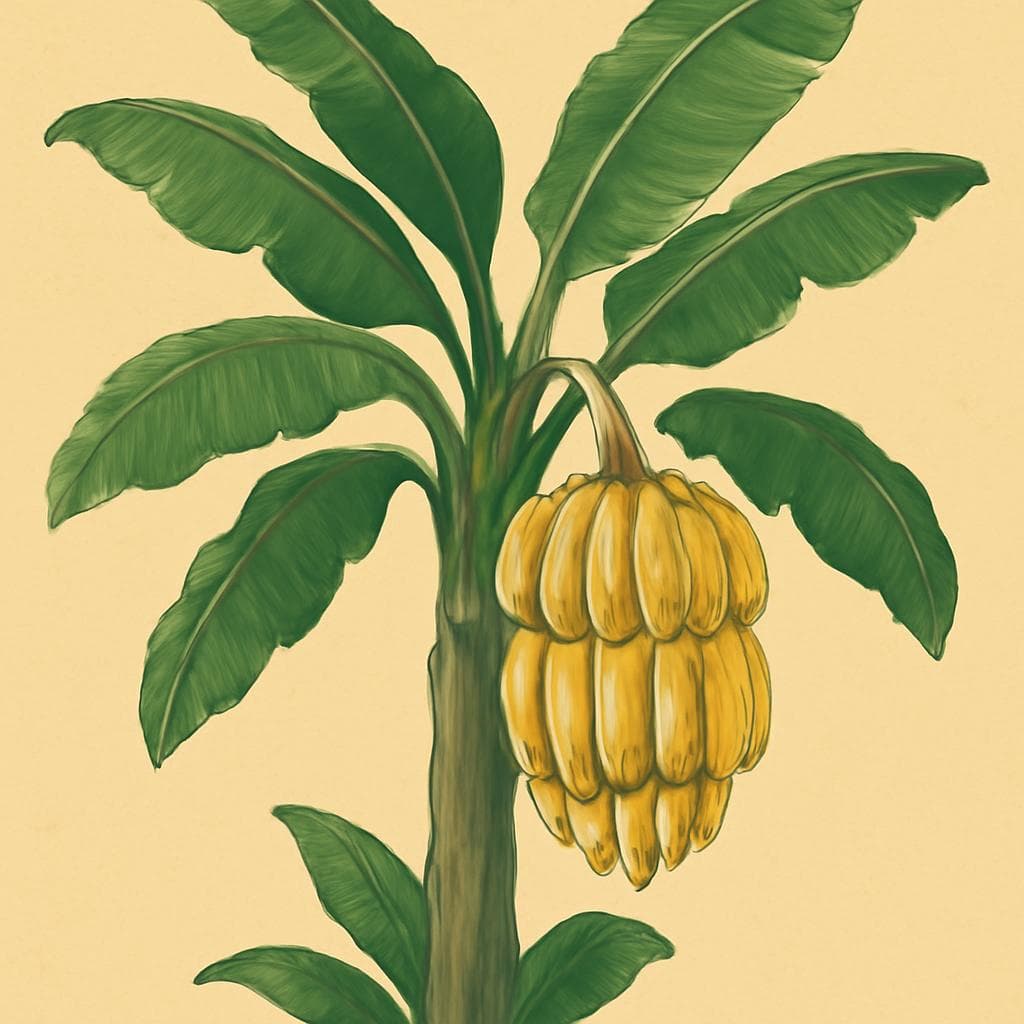
The Quiz Question
Bananas grow on trees.
- A. True
- B. False
- C. Only wild ones
- D. Only in Africa
The answer is B. False. Here is the full story.
Wait — Bananas Don't Actually Grow on Trees?
It looks like a tree. It's as tall as a tree. It even has something that resembles a trunk. But the banana "tree" is, botanically speaking, no tree at all. It's a giant herb — and one of the largest on the planet.
What's Actually Going On with That "Trunk"
A real tree trunk is made of wood — hardened, lignified tissue that builds up year after year. The banana plant has none of that. What looks like a trunk is called a pseudostem, which literally means "false stem." It's formed by tightly packed layers of leaf bases, wrapped around each other like a roll of thick paper towels. Cut one open and you won't find solid wood — just layer after layer of moist, fibrous leaf material.
The actual stem of the banana plant stays underground. It's a bulb-like structure called a corm, and it's from this corm that new shoots — called suckers — emerge to produce future plants.
So If It's Not a Tree, What Is It?
Botanists classify banana plants in the genus Musa, and they belong to the order Zingiberales — making them distant relatives of ginger and turmeric. Like those plants, bananas are herbaceous, meaning they have no persistent woody stem above ground. The entire visible structure dies back after the plant fruits, and a new shoot takes over.
Each pseudostem only fruits once. After the bunch of bananas is harvested, that stem is cut down. The plant continues through offshoots from the same underground corm — so a banana "plantation" is really a colony of enormous, fruiting herbs regenerating from a shared root system.
Just How Big Can These Herbs Get?
Some varieties of banana plant reach over 9 metres (30 feet) tall. That makes them the world's largest herbaceous plants — taller than many actual trees. The Abyssinian banana (Ensete ventricosum), a close relative, can grow even larger. Size alone, it turns out, has nothing to do with whether something is technically a tree.
Why Does This Mix-Up Happen?
Language and appearance conspire against us here. People call it a banana tree, it stands tall in tropical landscapes, and the fruit hangs from what sure looks like branches. But botany doesn't care about appearances — it cares about structure. No wood, no tree.
The distinction matters practically, too. Because banana plants are herbs that die back after fruiting, they're far more vulnerable to disease than woody perennials. The commercial banana industry learned this the hard way in the mid-20th century when a fungal pathogen called Panama disease nearly wiped out the then-dominant Gros Michel variety — a catastrophe that wouldn't have spread so easily through a true tree crop.
So next time you peel a banana, remember: you're eating the fruit of a colossal herb.