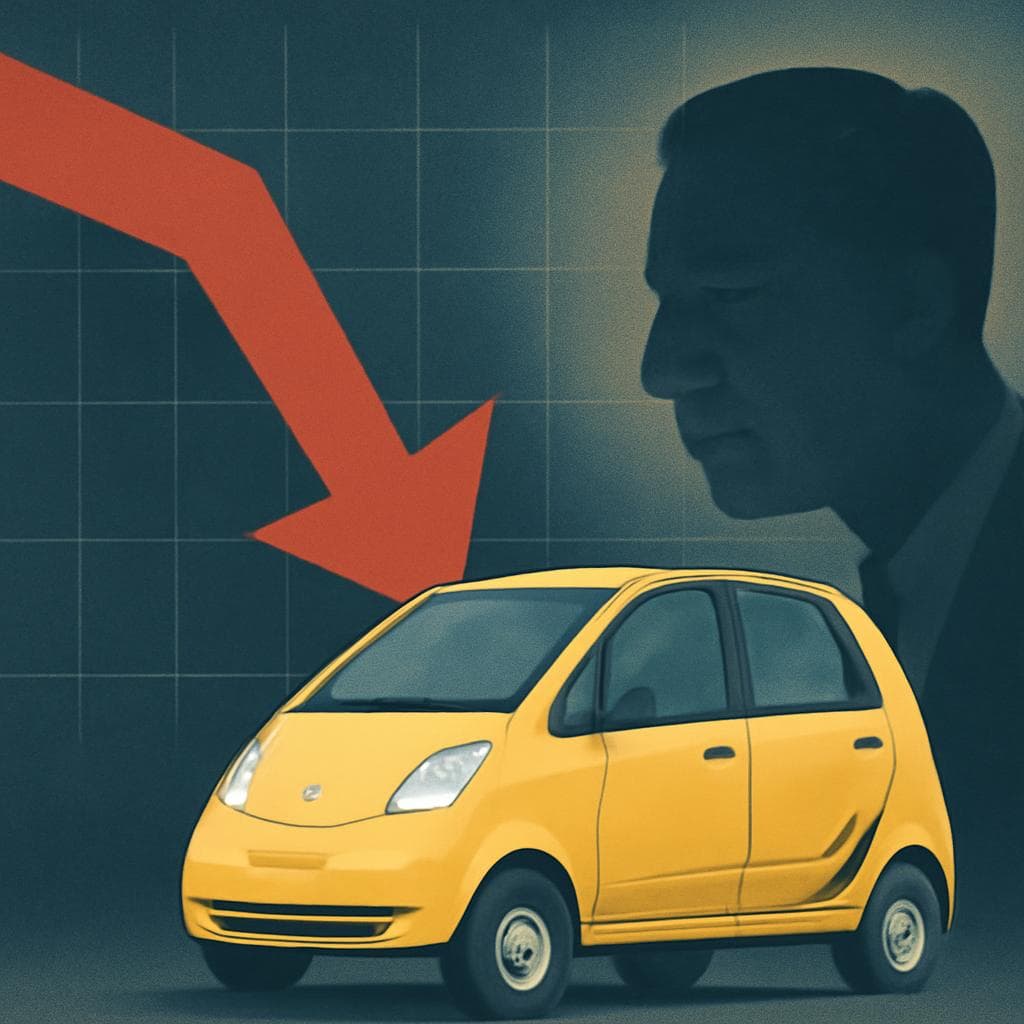
The Quiz Question
Why did the Tata Nano struggle after its 2009 launch as the world's cheapest car?
- A. It was banned from highways
- B. The cheapest-car image put buyers off, plus early safety worries
- C. It used too much fuel
- D. It was never actually sold
The answer is B. The cheapest-car image put buyers off, plus early safety worries. Here is the full story.
The Car That Nobody Wanted to Be Seen In
When Ratan Tata unveiled the Nano in January 2008, it felt like a genuine miracle of engineering and ambition. Here was a real, road-legal car priced at roughly 100,000 rupees — about $2,500 — designed to give millions of Indian families a safer alternative to overloaded motorcycles. The press went wild. Time magazine called it one of the best inventions of the year. The world was watching.
So what went wrong? Quite a lot, as it turned out.
The Poverty Stigma Problem
Tata's biggest mistake was making "cheapest" the entire identity of the car. In marketing terms, this was a disaster. In India — as anywhere — a car isn't just transport. It's a status symbol, a signal to neighbours and colleagues that you've made it. Calling something the world's cheapest car told potential buyers exactly the opposite of what they wanted to hear.
Middle-class Indian consumers, the very people the Nano was aimed at, quietly walked away. Nobody wanted to pull up outside a wedding or an office and advertise that they'd bought the bottom-of-the-barrel option. Many chose to stretch their budgets for a second-hand Maruti instead — a car with no embarrassing superlatives attached to it.
The Fire Incidents That Shook Public Trust
On top of the image problem came something far more alarming. In 2010, multiple Nano vehicles caught fire while being driven. Reports emerged from several Indian states, and although the total number of incidents was relatively small, the story spread fast. In a country where word-of-mouth carries enormous weight, rumours of spontaneous combustion were devastating.
Tata investigated and made engineering changes, but the damage was done. Safety concerns attached themselves to the brand like a shadow. A cheap car catching fire confirmed every anxiety a cautious buyer might have had about cutting costs on something as fundamental as a vehicle.
Sales Collapse and the Lessons Left Behind
At peak production, Tata had anticipated selling around 250,000 Nanos per year. By 2017, monthly sales had fallen to single digits — literally fewer than ten cars in some months. The Nano was officially discontinued in 2018.
The deeper lesson is one that business schools now teach as a textbook case. Affordability is a genuine virtue, but it has to be framed carefully. Successful budget brands — think Ikea, Aldi, or Ryanair — sell value, efficiency, and smart spending. They never lead with "this is the cheapest thing you can buy." Tata did exactly that, and aspirational consumers in a fast-growing economy simply weren't interested in wearing that label.
The Nano wasn't a bad car. Independent reviews often found it perfectly functional for city driving. It was a victim of its own marketing, and of the very human desire — regardless of income — to feel like you're moving up in the world, not reminding everyone of where you started.