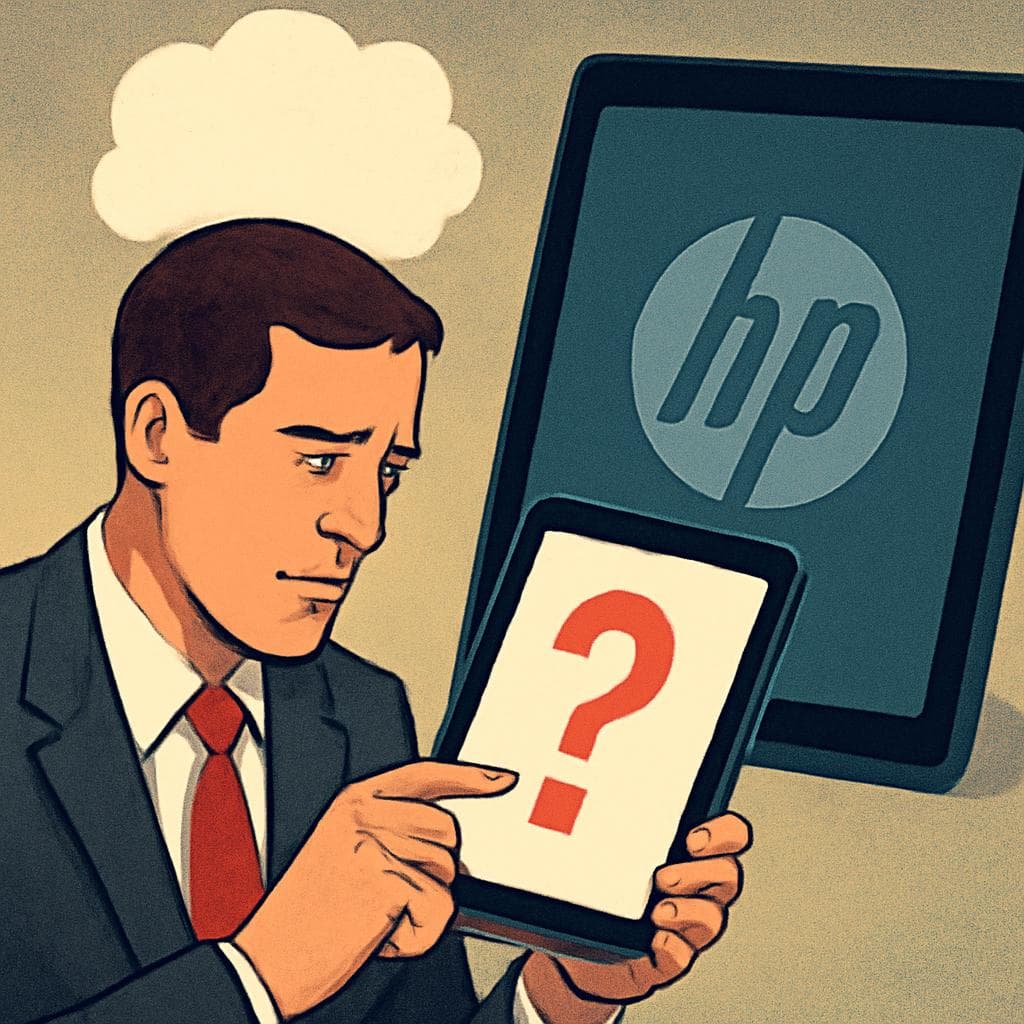
The Quiz Question
Why did HP discontinue the TouchPad just weeks after its 2011 launch?
- A. A battery recall
- B. Weak sales and webOS could not compete with the iPad
- C. A screen shortage
- D. It was too expensive to ship
The answer is B. Weak sales and webOS could not compete with the iPad. Here is the full story.
HP's TouchPad: One of Tech's Most Spectacular Flameouts
When HP launched the TouchPad in July 2011, it was supposed to be the company's big swing at the booming tablet market. Instead, it became one of the fastest and most dramatic product failures in tech history — dead and buried after just 49 days on store shelves.
A Crowded Market With a Dominant King
The timing could hardly have been worse. Apple had launched the original iPad in April 2010, and by the time HP entered the arena, the iPad had already sold tens of millions of units and completely redefined what consumers expected from a tablet. HP's TouchPad ran webOS — an operating system it had inherited through its $1.2 billion acquisition of Palm in 2010. WebOS was genuinely praised by reviewers for its elegant multitasking interface, but praise doesn't pay the bills.
The problem was the app ecosystem, or rather the devastating lack of one. The iPad had the App Store stacked with hundreds of thousands of titles. WebOS had a fraction of that, and developers had little incentive to build for a platform that wasn't gaining traction. Consumers noticed immediately.
The Sales Numbers Were Brutal
Retailers reported that TouchPads sat untouched on shelves. Best Buy, one of HP's biggest retail partners, reportedly had around 250,000 unsold units piling up in its warehouses and pushed HP to take them back. That kind of feedback from a major retail chain is about as loud a signal as a company can receive.
HP had priced the 16GB TouchPad at $499 — exactly matching the entry-level iPad 2. Without a better app library, stronger brand recognition in the tablet space, or a compelling reason to choose webOS over Apple's polished ecosystem, there was almost nothing to draw buyers in.
The Plug Gets Pulled
On August 18, 2011, HP announced it was discontinuing the TouchPad and effectively killing off its entire webOS hardware division. The announcement stunned the industry. The device had been on sale for less than seven weeks.
What followed was an accidental retail phenomenon. HP slashed the TouchPad's price to $99 to clear remaining stock, and suddenly everyone wanted one. The fire-sale units sold out almost instantly, crashing websites and causing lines at physical stores. It was a bitterly ironic coda — the product became a hot commodity only after HP gave up on it.
The Bigger Lesson
The TouchPad story is a masterclass in how hardware alone can't win a platform war. WebOS's technical merits were real, but in the tablet market of 2011, the battle was already being fought — and largely won — on software, apps, and ecosystem loyalty. HP had the money and the manufacturing muscle, but it couldn't close that gap fast enough.
Apple had built a moat, and the TouchPad drowned trying to cross it.