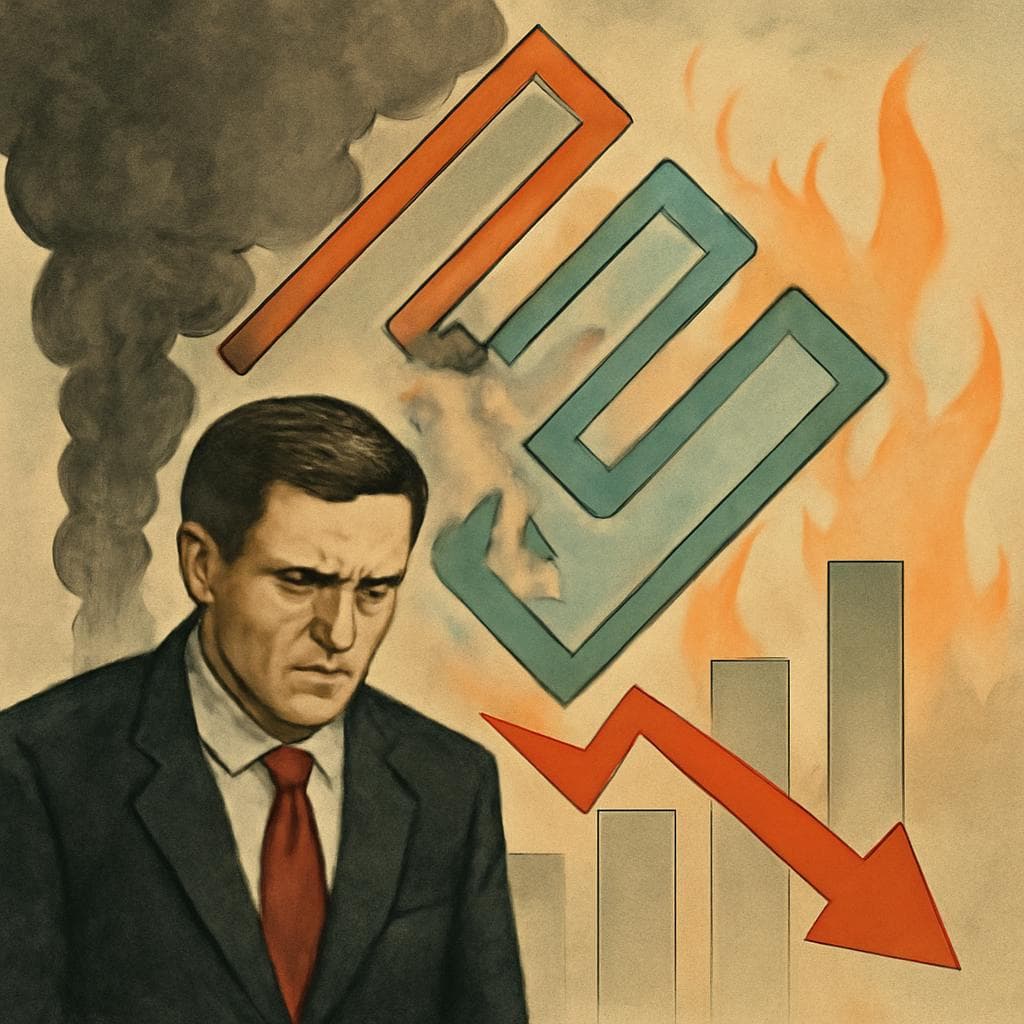
The Quiz Question
Why did energy giant Enron collapse in 2001?
- A. A factory explosion
- B. Accounting fraud that hid massive debt
- C. An oil price crash
- D. A hostile takeover
The answer is B. Accounting fraud that hid massive debt. Here is the full story.
The Rise and Catastrophic Fall of Enron
At its peak, Enron was the seventh-largest company in the United States, a darling of Wall Street with a stock price that soared above $90 per share. By December 2001, it was bankrupt — and the financial world would never look quite the same again.
A Web of Financial Deception
The core of Enron's collapse was a sophisticated and deliberate accounting fraud. Company executives, led by CEO Jeffrey Skilling and founder Kenneth Lay, used a network of off-the-books partnerships called Special Purpose Entities (SPEs) to hide billions of dollars in debt and toxic assets. These shell companies kept the losses off Enron's main balance sheet, making the company appear far healthier and more profitable than it actually was.
Enron also aggressively used a controversial accounting method called mark-to-market accounting. This allowed the company to book the estimated future profits of long-term contracts immediately, the moment a deal was signed — even if the cash never materialised. On paper, the numbers looked extraordinary. In reality, many of those projected profits were pure fantasy.
The Enablers: Auditors and Analysts Who Looked Away
Enron's auditor, the prestigious firm Arthur Andersen, was supposed to catch exactly this kind of manipulation. Instead, it signed off on the misleading statements — and when the scandal broke, Arthur Andersen employees shredded thousands of documents related to the audit. The firm was subsequently convicted of obstruction of justice and essentially ceased to exist, collapsing alongside its most infamous client.
Wall Street analysts, meanwhile, continued to rate Enron's stock a "buy" even as warning signs piled up. The company's financial statements were so deliberately complex that many professionals either couldn't decode them — or chose not to look too hard.
The Whistleblower and the Unravelling
In August 2001, Enron vice president Sherron Watkins sent an anonymous memo to Kenneth Lay warning that the company was about to implode. Her concerns were largely ignored internally. When journalist Bethany McLean at Fortune magazine started asking pointed questions about how Enron actually made its money, the cracks became impossible to paper over.
By October 2001, Enron reported a $618 million quarterly loss. The SEC launched a formal investigation. In December, the company filed for what was then the largest bankruptcy in US history — wiping out $74 billion in shareholder value and destroying the retirement savings of thousands of employees.
The Lasting Legacy
Skilling was sentenced to 24 years in prison (later reduced). Lay was convicted but died before sentencing. The scandal directly prompted the Sarbanes-Oxley Act of 2002, landmark legislation that imposed sweeping new rules on corporate accounting and executive accountability — rules that still govern American business today.
Enron didn't just go bankrupt. It permanently changed how the world thinks about corporate transparency and trust.