The Quiz Question
Which central bank sets interest rates for the United States?
- A. World Bank
- B. Federal Reserve
- C. IMF
- D. US Treasury
The answer is B. Federal Reserve. Here is the full story.
The Federal Reserve: America's Financial Command Center
When you swipe your credit card, take out a mortgage, or park money in a savings account, the interest rate attached to that transaction traces back — directly or indirectly — to one institution: the Federal Reserve. Known informally as "the Fed," it is the central bank of the United States and one of the most powerful financial institutions on the planet.
How the Fed Actually Sets Rates
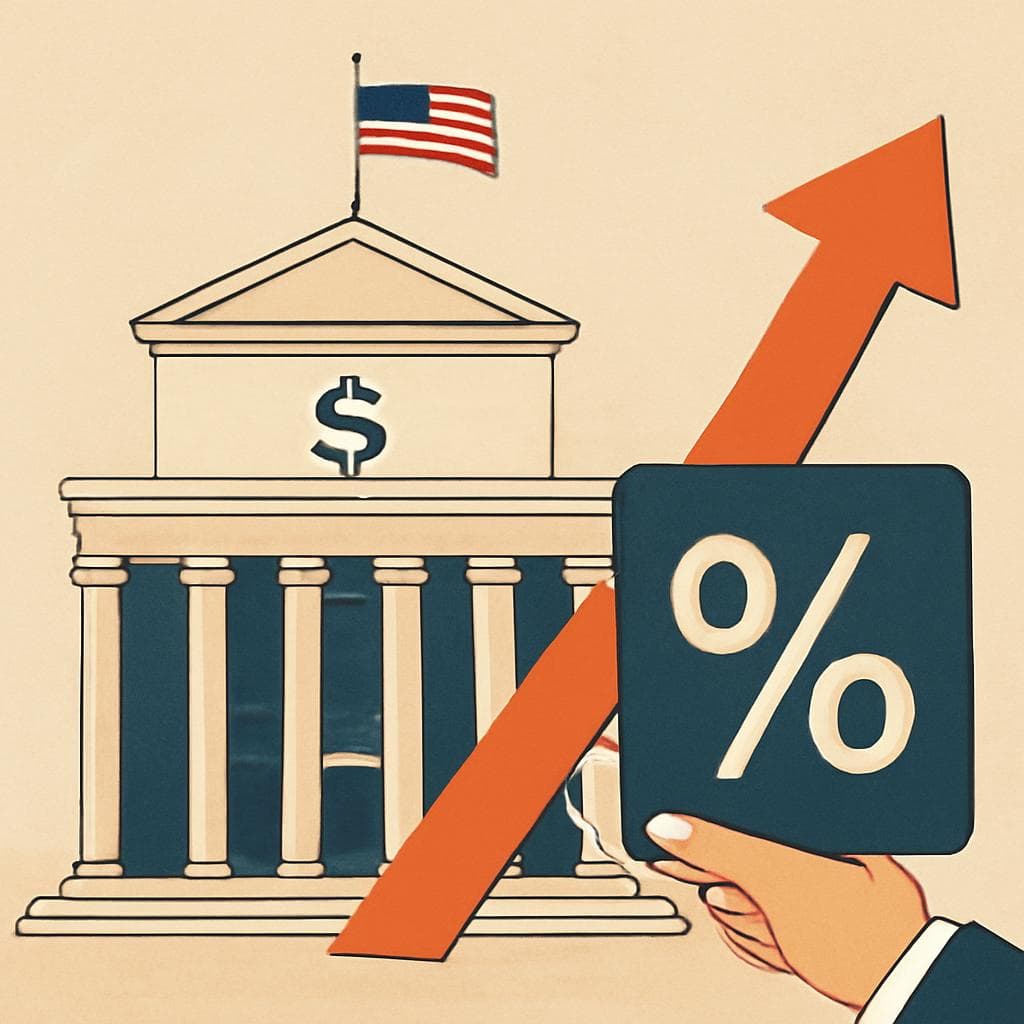
The Fed doesn't set every interest rate you encounter in daily life, but it controls something called the federal funds rate — the rate at which banks lend money to each other overnight. That single number ripples outward, influencing everything from your mortgage and car loan to what a corporation pays to borrow billions of dollars.
The body responsible for making that call is the Federal Open Market Committee (FOMC). It meets eight times a year in Washington, D.C., and its decisions move global markets within seconds of being announced. The committee includes the seven members of the Fed's Board of Governors plus five of the twelve regional Federal Reserve Bank presidents.
A Bank Unlike Any Other
The Federal Reserve was created by Congress in 1913, after a series of financial panics — most notably the Panic of 1907 — exposed how dangerously fragile the American banking system was without a central authority. President Woodrow Wilson signed the Federal Reserve Act into law on December 23, 1913.
It has a peculiar structure: it is neither a purely government agency nor a fully private institution. The Board of Governors is a federal agency, with members appointed by the President and confirmed by the Senate. The twelve regional Reserve Banks, however, are technically private entities owned by member banks. This hybrid design was intentional — a compromise to prevent any single faction from dominating monetary policy.
The Dual Mandate
Congress gave the Fed two primary goals, often called the dual mandate: maximum employment and stable prices (controlling inflation). These two objectives can pull in opposite directions. Raising interest rates cools inflation but can slow hiring. Cutting rates stimulates the economy but risks pushing prices higher. Navigating that tension is the Fed's central challenge.
This balancing act came into sharp public focus between 2022 and 2023, when the Fed raised rates eleven times in an aggressive campaign to bring inflation down from a four-decade high. Everyday Americans felt it immediately in rising mortgage rates and higher credit card APRs.
Why It Matters to You
The Fed's decisions touch virtually every financial decision an American makes. Buying a home? The 30-year mortgage rate moves with Fed policy. Running a small business? Your line of credit costs more or less depending on what the FOMC decided at its last meeting. Even the return on a basic savings account is tied to the federal funds rate.
Understanding the Federal Reserve isn't just academic — it's practical knowledge that helps make sense of the financial world around you.