The Quiz Question
What term describes a sustained rise in the general price level of goods and services?
- A. Deflation
- B. Recession
- C. Inflation
- D. Stagnation
The answer is C. Inflation. Here is the full story.
The Force That Quietly Eats Your Money
Inflation is one of those economic forces that works in the background, slowly but relentlessly reshaping what your money can actually buy. It happens when the general price level of goods and services rises over a sustained period — meaning a dollar today buys less than a dollar did last year, or a decade ago.
It's not just about one product getting more expensive. It's a broad, economy-wide trend measured across thousands of items, from groceries and rent to haircuts and car repairs.
How Economists Actually Measure It
In the United States, inflation is most commonly tracked using the Consumer Price Index (CPI), published monthly by the Bureau of Labor Statistics. The CPI monitors a "basket" of everyday goods and services that a typical household might buy. When that basket gets more expensive over time, that's inflation at work.
Another key measure is the Personal Consumption Expenditures (PCE) price index, which the Federal Reserve prefers because it adjusts for changes in consumer behavior — like switching from beef to chicken when beef prices spike.
What Actually Causes It?
Inflation has several root causes. Demand-pull inflation happens when consumer demand outpaces supply — too much money chasing too few goods. Cost-push inflation occurs when production costs rise (think energy prices or wages), forcing businesses to charge more. There's also built-in inflation, a kind of self-fulfilling cycle where workers expect higher prices and demand higher wages, which then drives prices up further.
Governments and central banks can also contribute by expanding the money supply too rapidly. More money in circulation, without a matching increase in goods and services, tends to push prices higher.
Famous Moments in Inflation History
Germany's Weimar Republic in the early 1920s is one of history's most dramatic examples of hyperinflation — a runaway version of the phenomenon. By 1923, a loaf of bread cost billions of marks. People carried cash in wheelbarrows. It destabilized the entire country.
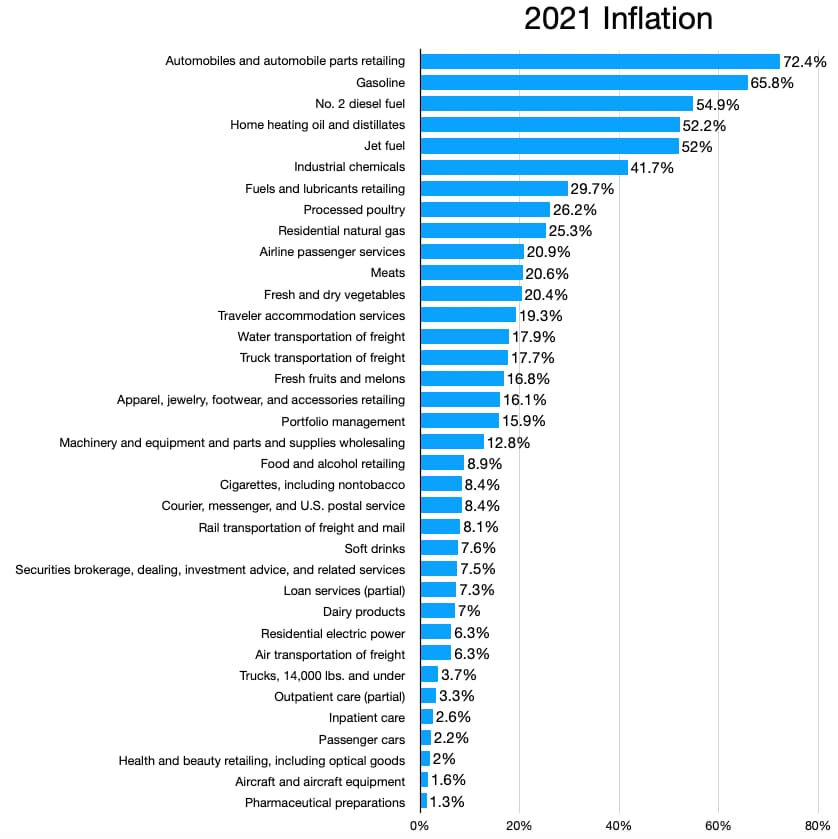
More recently, the post-pandemic era (2021–2023) saw inflation surge across much of the world. In the US, it peaked at around 9.1% in June 2022 — the highest rate in roughly 40 years — driven by supply chain disruptions, stimulus spending, and an energy shock following the war in Ukraine.
Why a Little Inflation Is Actually Normal
Most central banks, including the US Federal Reserve, actually target an inflation rate of around 2% per year. A modest level keeps economies moving — it encourages spending and investment rather than hoarding cash. It's deflation (falling prices) that can be truly dangerous, as it signals economic contraction and can trigger a damaging downward spiral.
So inflation, in the right dose, is the economy breathing. Too much, though, and it becomes a serious threat to purchasing power, savings, and financial stability for everyone.