The Quiz Question
What does it mean to dollar-cost average?
- A. Invest a fixed amount at regular intervals
- B. Buy only when prices drop
- C. Convert your currency
- D. Average out your monthly bills
The answer is A. Invest a fixed amount at regular intervals. Here is the full story.
The Smart Way to Invest Without Trying to Predict the Future
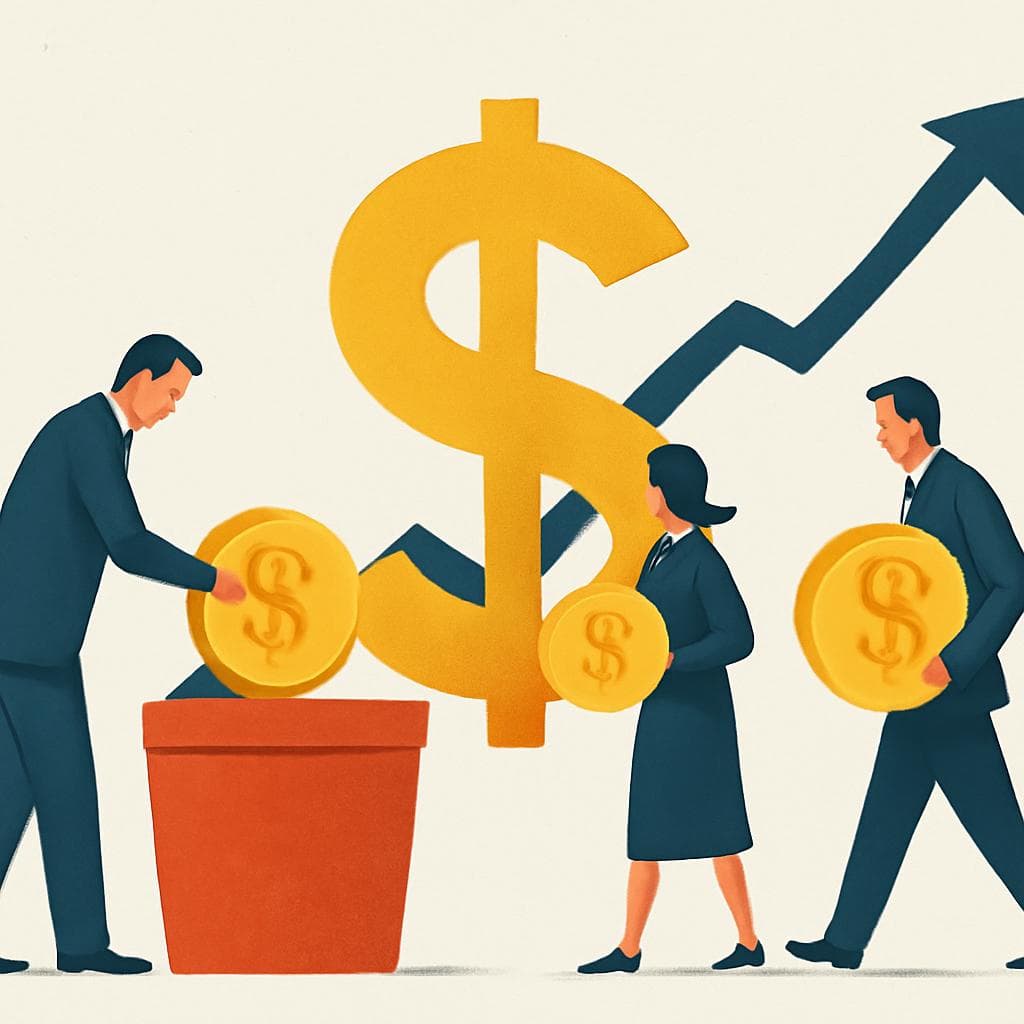
Dollar-cost averaging (DCA) is one of the most time-tested strategies in personal investing — and it's beautifully simple. Instead of dumping a large lump sum into the market all at once, you invest a fixed dollar amount on a regular schedule, whether that's weekly, monthly, or quarterly. The market goes up, the market goes down — you invest the same amount regardless.
How It Actually Works in Practice
Say you commit to investing $200 every month into an S&P 500 index fund. Some months, the price per share is high, so your $200 buys fewer shares. Other months, prices dip, and your $200 stretches further, buying more shares at a discount. Over time, this averages out your cost per share — hence the name.
Here's the key math: because you buy more shares when prices are low and fewer when prices are high, your average cost per share tends to be lower than the average price over the same period. That's not magic — it's just arithmetic working in your favor.
Why It Takes Emotion Out of the Equation
Most investors lose money not because the market failed them, but because fear and greed did. People panic-sell during downturns and pile in during booms — the exact opposite of "buy low, sell high." Dollar-cost averaging sidesteps that trap by automating the decision. You're not timing the market; you're making time in the market work for you.
Benjamin Graham, the father of value investing and Warren Buffett's mentor, championed this approach in his landmark 1949 book The Intelligent Investor. He argued that the "defensive investor" — someone without the time or expertise to analyze individual stocks — was far better served by consistent, systematic investing than by trying to outguess Wall Street.
The Real-World Numbers Back It Up
A Vanguard study from 2012 found that lump-sum investing outperforms dollar-cost averaging about two-thirds of the time in rising markets — simply because money is put to work sooner. But for most people, DCA wins in practice because it's sustainable. It matches how people actually earn money — in regular paychecks — and it prevents the paralysis of waiting for the "perfect" moment to invest (spoiler: that moment never comes).
Your 401(k) at work is probably already using this strategy. Every paycheck, a fixed percentage goes in automatically. That's dollar-cost averaging by design.
Who It's Best For
DCA is ideal for long-term investors — people building retirement savings, college funds, or generational wealth over decades. It won't make you rich overnight, and it won't protect you from a bad investment choice. But applied consistently to diversified, low-cost index funds, it's one of the most reliable wealth-building tools available to everyday investors.
The strategy's greatest feature isn't financial — it's psychological. It gives you a plan you can actually stick to, no matter what the headlines say.