The Quiz Question
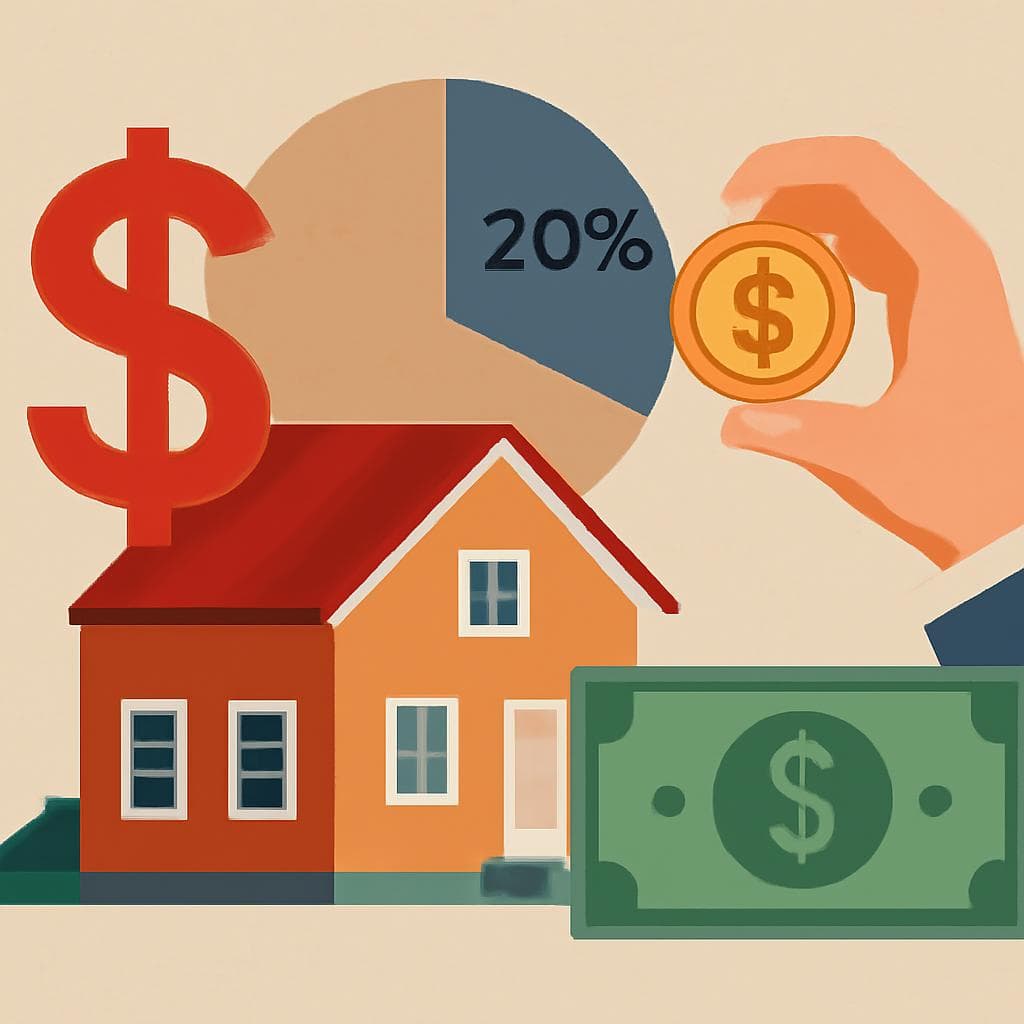
A house costs $300,000 with a 20% down payment. How much is the down payment?
- A. $30,000
- B. $60,000
- C. $45,000
- D. $90,000
The answer is B. $60,000. Here is the full story.
Breaking Down the 20% Down Payment Rule
Sixty thousand dollars. That's what you'd need to hand over upfront before you even get the keys to a $300,000 home. It's a big number, and understanding exactly how it works can make the home-buying process feel a lot less mysterious.
The math itself is straightforward: 20% of $300,000 is calculated by multiplying 300,000 by 0.20, which gives you $60,000. After that down payment, you'd be financing the remaining $240,000 through a mortgage loan.
Why 20% Became the Magic Number
The 20% down payment has been a benchmark in American home buying for decades. It didn't appear out of thin air — lenders settled on this threshold because it significantly reduces their risk. When a buyer puts down 20% or more, they immediately have substantial equity in the home, making them far less likely to default on the loan.
There's also a very practical financial perk for the buyer: avoiding Private Mortgage Insurance, commonly known as PMI. If you put down less than 20%, most conventional lenders require you to pay PMI — an extra monthly fee that typically runs between 0.5% and 1.5% of the original loan amount per year. On a $240,000 loan, that could mean paying an extra $1,200 to $3,600 annually until you've built up enough equity. Hitting that 20% mark from the start means you skip that cost entirely.
The Reality of Saving $60,000
For most people, saving $60,000 is no small feat. According to data from the Federal Reserve, the median American household income hovers around $70,000 to $75,000 per year. That means a 20% down payment on a $300,000 home represents nearly an entire year's worth of gross income for a typical household.
This is precisely why many first-time buyers explore alternatives. FHA loans, backed by the Federal Housing Administration, allow down payments as low as 3.5%. Some USDA and VA loans offer zero down payment options for qualifying rural buyers and military veterans, respectively. Conventional loans can sometimes be secured with as little as 3% down, though PMI will apply.
What Happens After the Down Payment
Once that $60,000 is paid, you're left with a $240,000 mortgage. At a 7% interest rate on a 30-year fixed loan — roughly in line with rates seen in recent years — your monthly principal and interest payment would land around $1,597. Over the full life of the loan, you'd end up paying approximately $574,000 total, meaning interest alone accounts for more than $330,000.
That's why the down payment matters so much. A larger upfront payment means a smaller loan balance, less interest paid over time, and lower monthly obligations. The $60,000 you put in on day one does a tremendous amount of financial heavy lifting throughout the life of the mortgage.
A Milestone Worth Understanding
Whether you're actively saving for a home or just brushing up on financial literacy, understanding how down payments work puts real power in your hands. The numbers aren't just math — they're the foundation of one of the biggest financial decisions most people will ever make.